There Are More Possible Chess Games Than Atoms in the Observable Universe, and You Still Played the Italian Opening
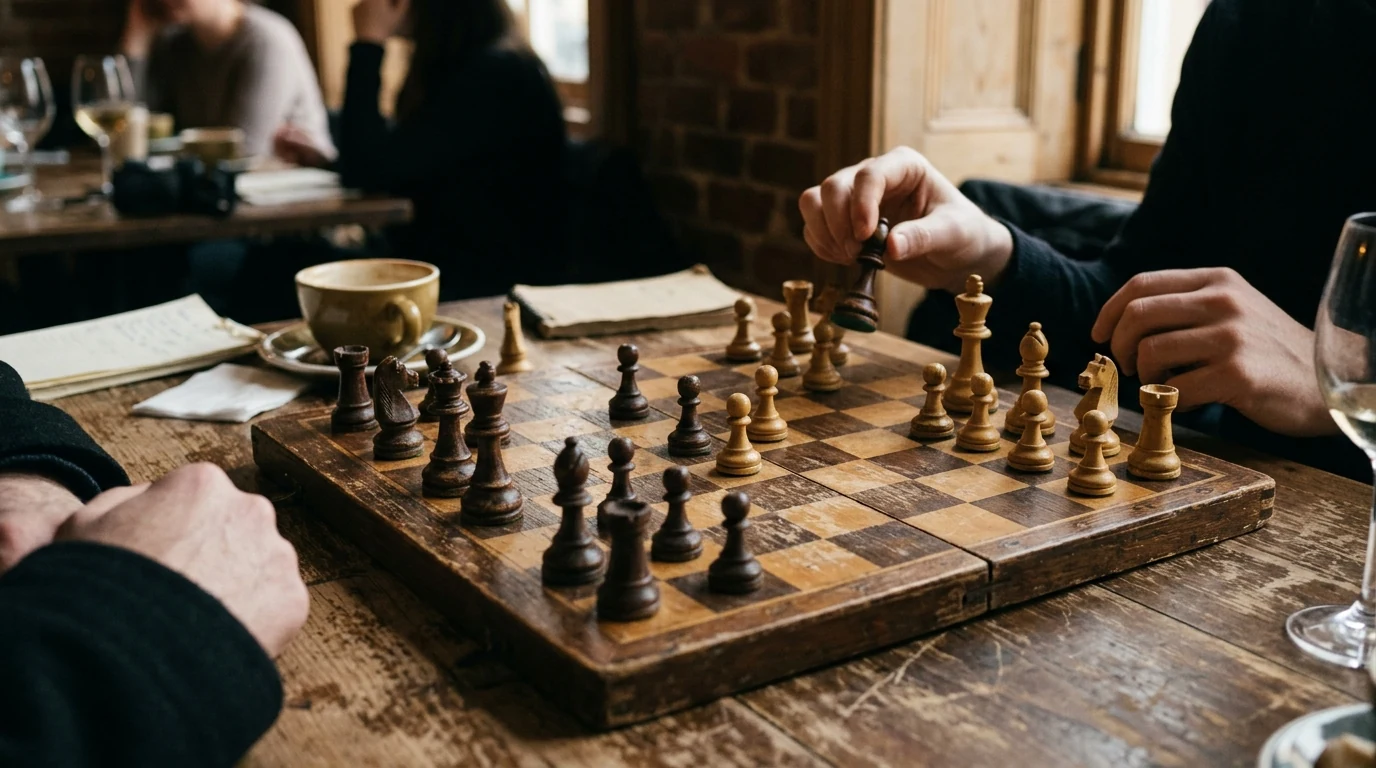
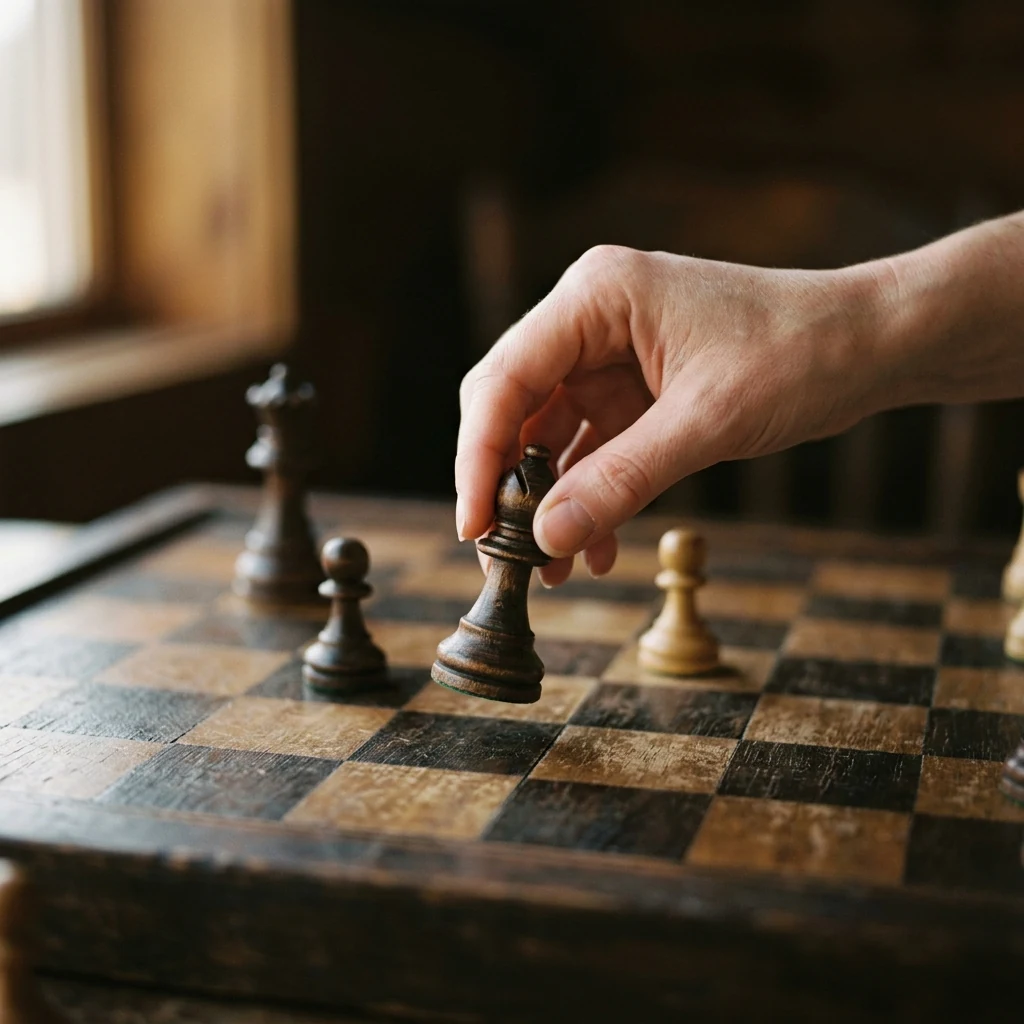
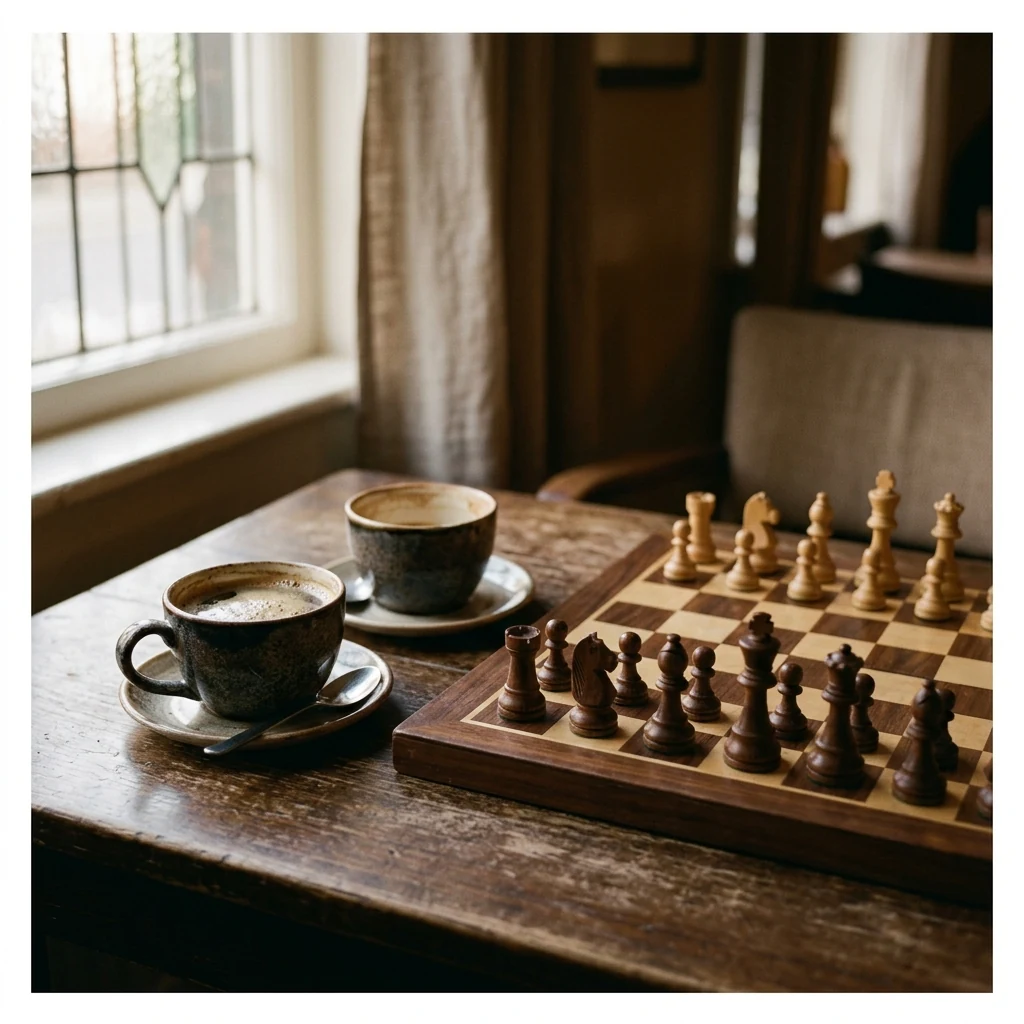
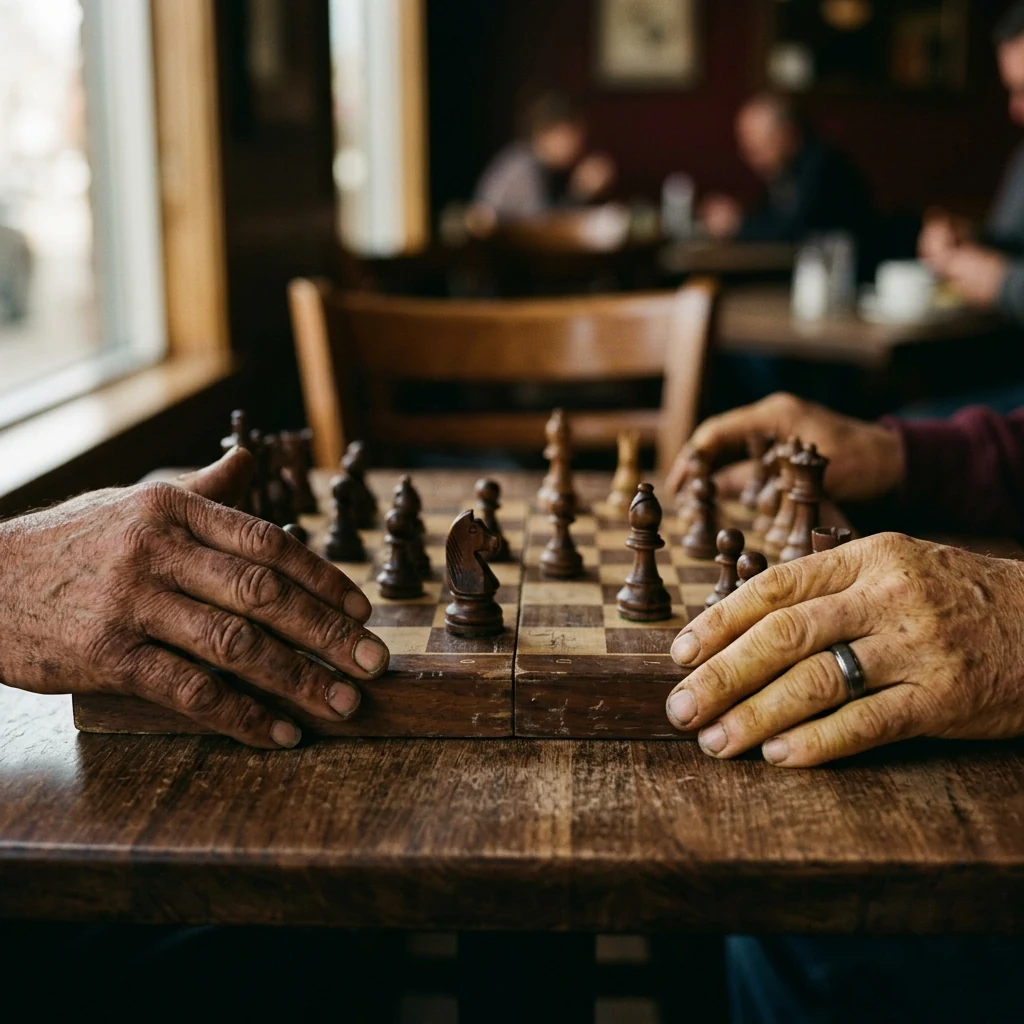
Two old men are sitting at a small wooden table in the corner of a café in the late afternoon. There are two coffees between them, both nearly cold. There is a chess board. There are two faintly tobacco-yellowed hands. The one with the white pieces opens, one e four, with the small confident push of a man who has opened this way every Tuesday for sixty years. The one with the black pieces replies, one dot dot dot e five, with the same confidence. The bishop comes out. Italian Opening. Same as last Tuesday. Same as the Tuesday before. Same, in fact, as 1967.
You might think, watching this, that you were watching two men who had run out of ideas. You would be wrong.
A man called Claude Shannon, who is famous for many things including more or less inventing modern information theory, did a small calculation in 1950 to estimate the number of possible legal games of chess. The number he got was, give or take, ten to the one hundred and twentieth power. This is now called the Shannon number. It is a number you should think about for a moment, because it is going to do some work later in this essay.
To give it scale: the number of atoms in the entire observable universe, by current estimates, is somewhere around ten to the eightieth power. The Shannon number is, therefore, roughly ten to the fortieth times larger than the number of atoms in the universe. That is, in slightly more legible terms, ten thousand trillion trillion trillion trillion times larger. There are, in the strictest combinatorial sense, more possible chess games than there are atoms.
Of these ten-to-the-one-hundred-and-twentieth possible games, the two old men at the wooden table have, between them, played perhaps fifty thousand games of chess in their lifetimes. They have, between them, used perhaps thirty distinct opening sequences. They have, in the strictest combinatorial sense, sampled almost none of the available space. The game they are playing this afternoon is, in fact, almost a re-run. They could each, plausibly, predict the next twelve moves.
You might still think, watching them, that you are watching two men who never tried.

This is, again, not a chess essay.
Of the infinite possible Tuesdays available to you, you keep making coffee the same way. You keep using the same cup. You keep walking to the same window. You keep saying the same small thing to whoever is across the table. Of the infinite possible conversations available to you with your closest friend, you keep having the same five. Of the infinite possible orders you could give at the Vietnamese restaurant on your street, you keep ordering the phở bò. Of the infinite possible openings to a life — among the literal trillions of trillions of trillions of paths down which a body and a mind could have walked — you have chosen the small narrow corridor that is yours.
You did not choose it the way you choose a meal in a menu. The corridor narrowed around you, slowly, every time you picked the thing you already liked. The first cup of coffee was an experiment. The thousandth was a corridor. The first conversation was a discovery. The thousandth was a wall.
The infinite, it turns out, is not where you live. The infinite is the size of the room your one specific corridor cuts through. Your corridor is small. Your corridor is repeated. Your corridor is, in the most precise sense, the Italian Opening, played for sixty years, against an old friend on a wooden board at a café in the late afternoon sun.
This is the part nobody mentions: the corridor is also what makes you a person. There is no version of you that takes a different route every Tuesday. That person is not a person. That person is the size of the space — vast, undifferentiated, never anywhere. You only become a self by narrowing. The self is what is left when the ten to the one hundred and twentieth has been thrown away, on purpose, by repetition.
The two old men know this. They do not know it in those words. They know it the way fish know water.
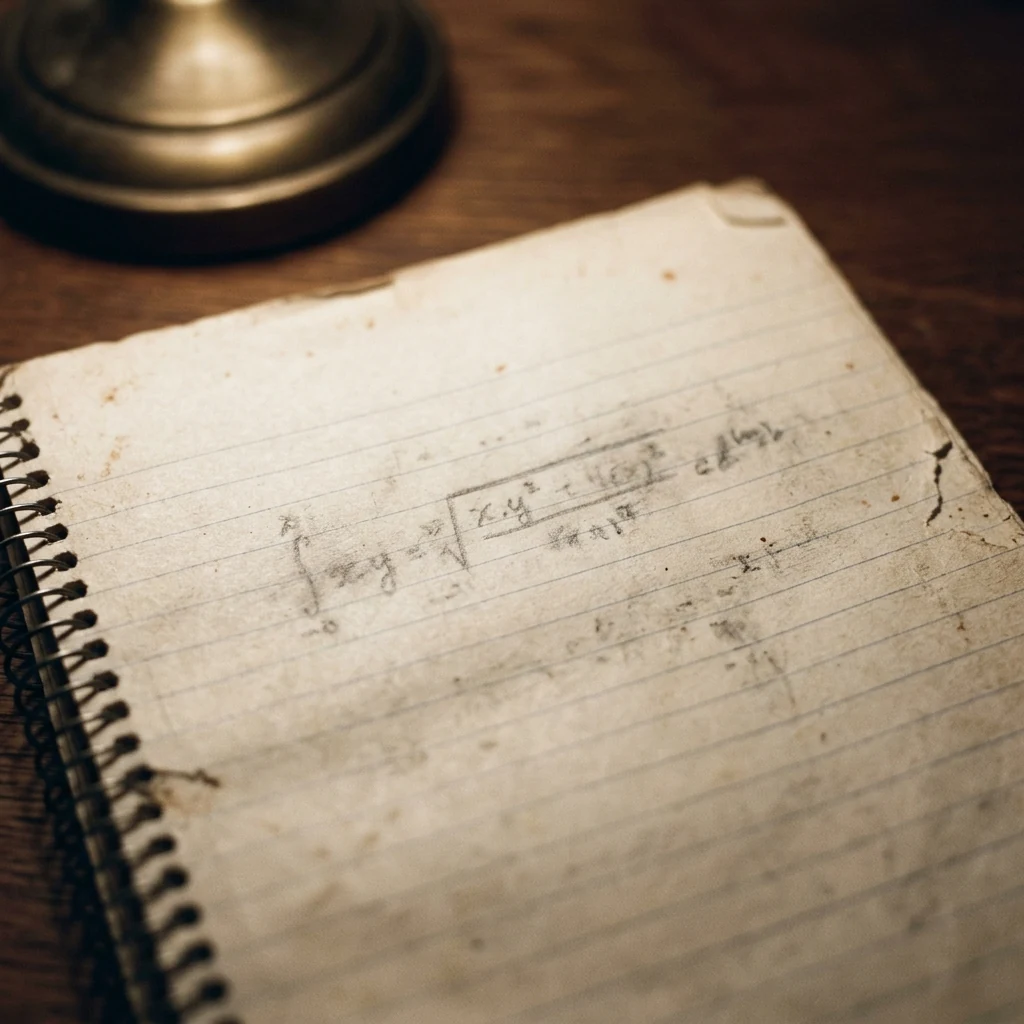
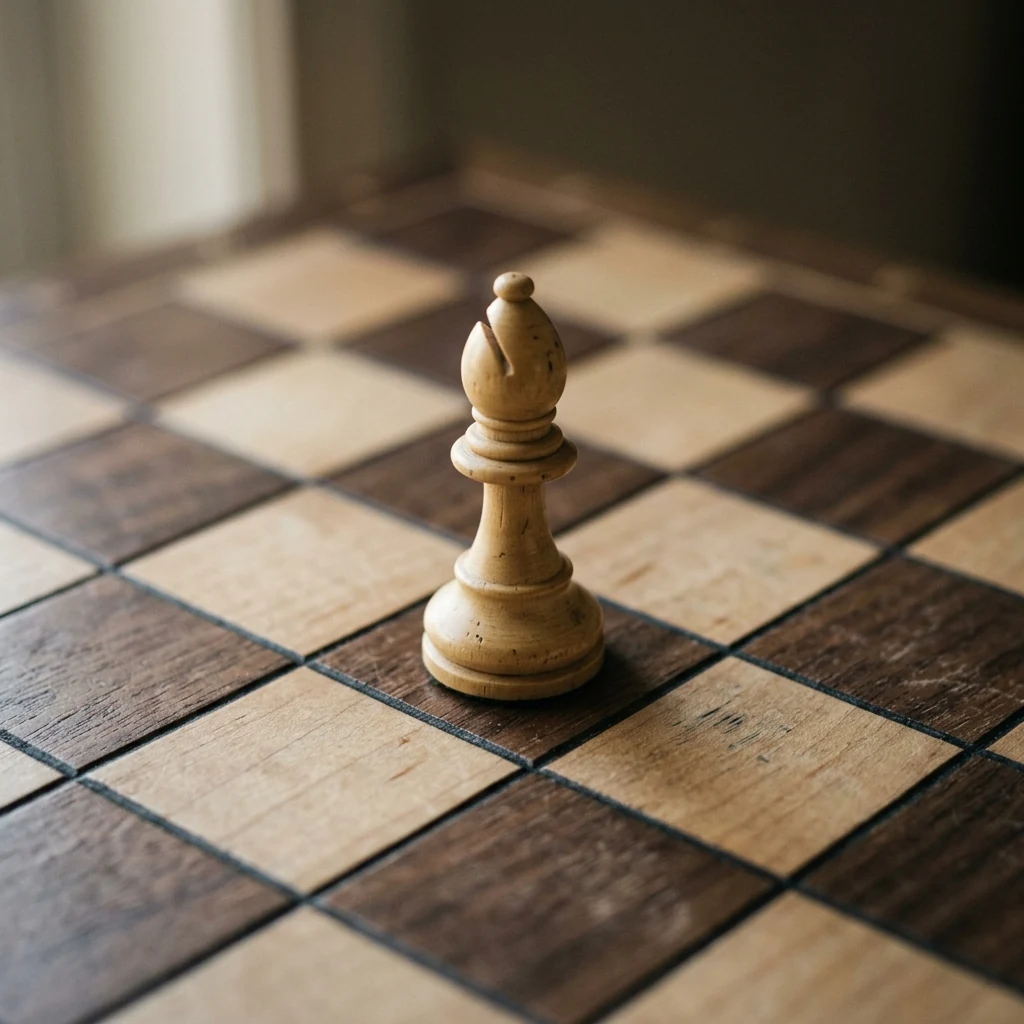
The man with the white pieces brings out his bishop. The man with the black pieces, who has been waiting for it for sixty years and waiting for it for the past forty seconds, smiles. He has, by now, considered approximately none of the possible Italian Opening responses, because he has been playing the one he likes for so long that the others no longer exist for him. He plays the one he likes. The man with the white pieces, who knew exactly which one was coming, plays the next move.
They will play this game on the next Tuesday, too. They will play it until one of them dies. The board has 10^120 possible games on it. They will play one of perhaps thirty between them, slowly, weekly, with great care, for the rest of the time they have.
The chosen corridor is the only kind of self there is.
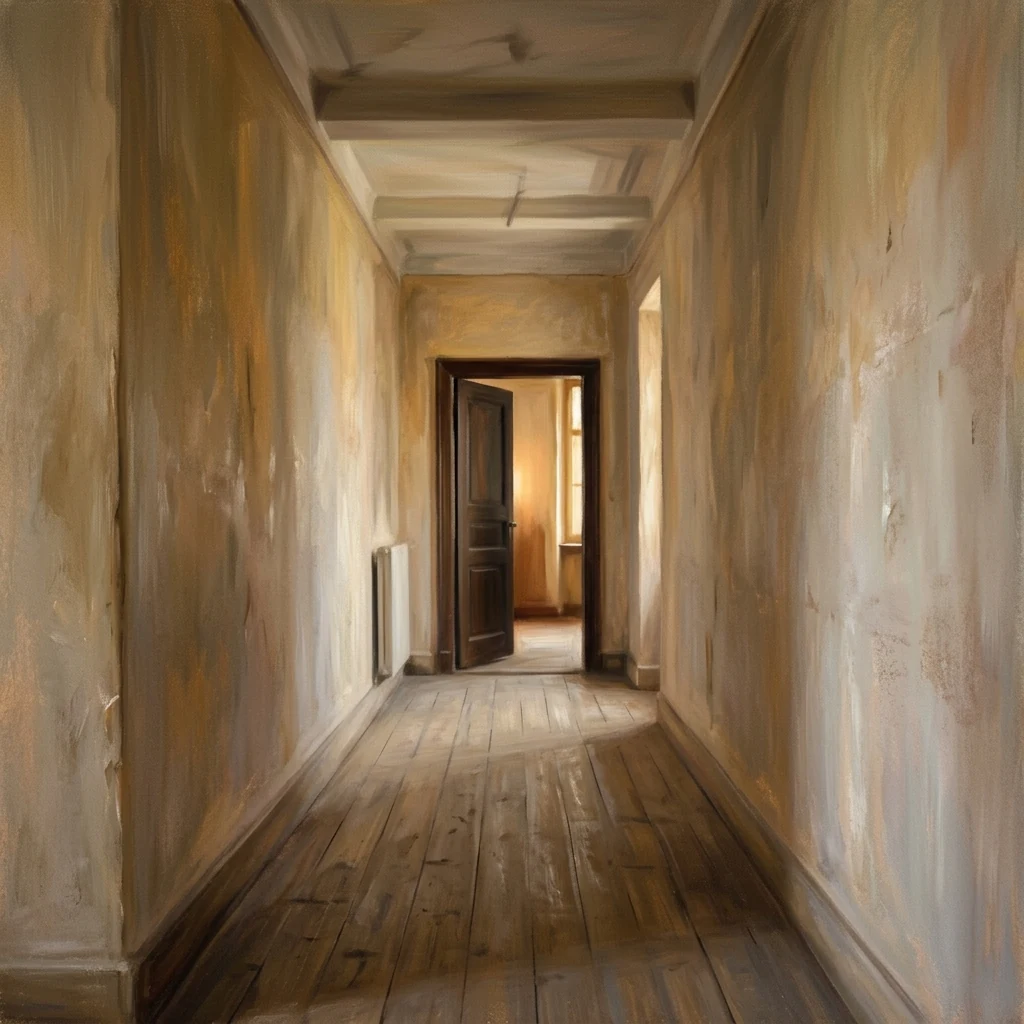
The infinite would not have been a life.

The white bishop is now on c4.
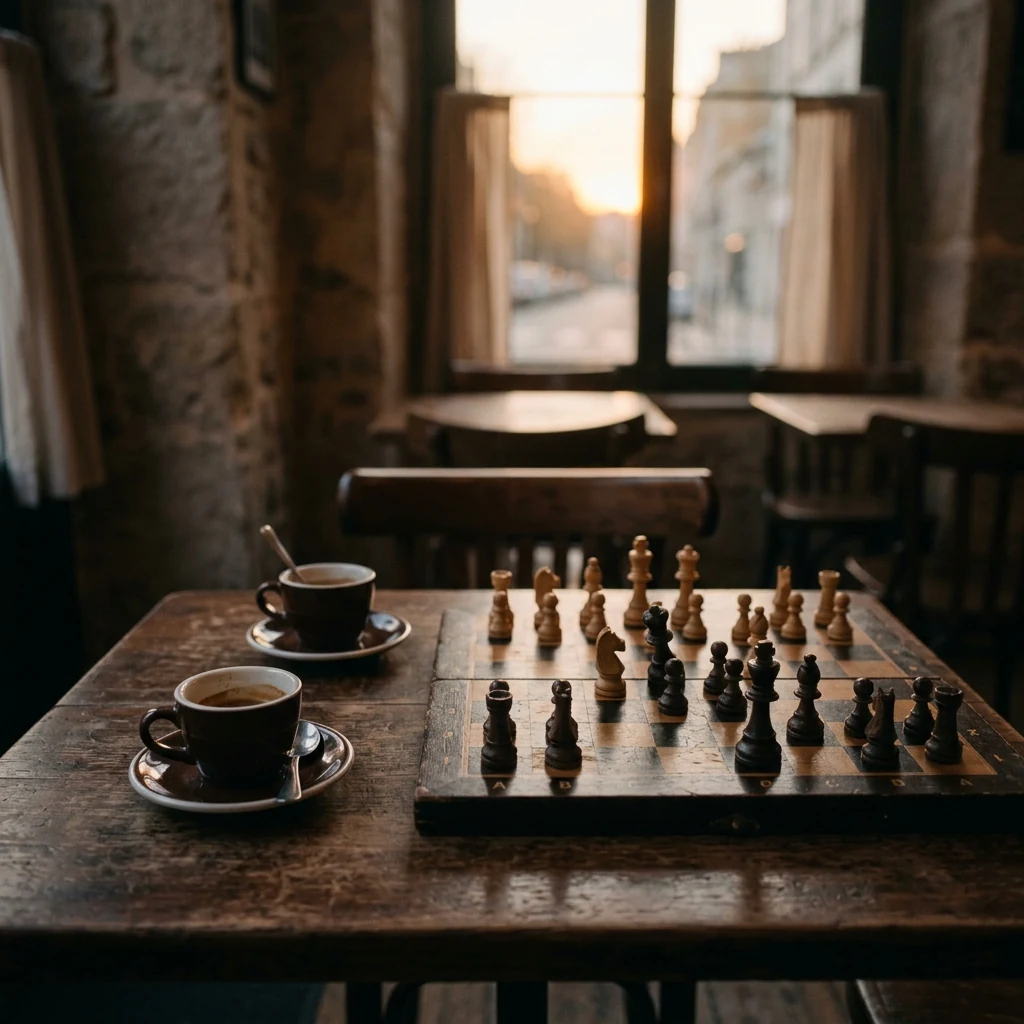
It is the friend's move.