
Why You Cannot Tickle Yourself, and What That Tells You About Everything Else
Try it. Right now, before anything else. Run your own fingers up your own ribs, the way someone once did to make you laugh until you cried. The fingers do exactly what theirs did. The skin is the same skin. The ribs are the same ribs.
Nothing happens. You feel pressure. You feel a slight surprise that something so obvious is not working. You do not laugh. You will not laugh, no matter how hard you try. The thing your sibling could do to you when you were nine, you cannot do to yourself at thirty-eight, and you cannot ever do to yourself, no matter how many years you practise.

The reason is not psychology. The reason is built into your brain at the level of the motor system, and the brain does it on purpose, and it does it many times per second, and the trick has a name. It is called forward modelling.
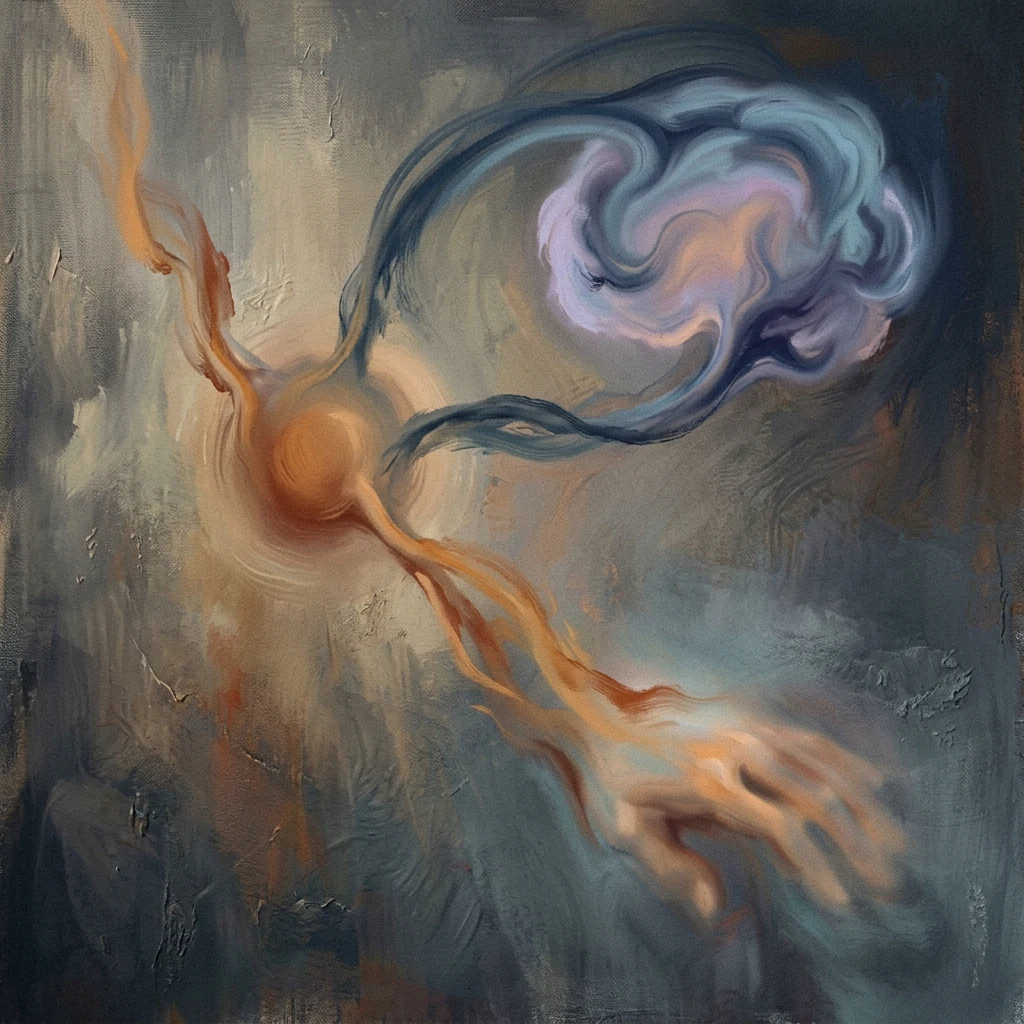
Here is what is happening. Every time your brain plans to move a finger, it sends two signals. One goes down your arm to actually move the finger. The other — a copy of the motor command, sent backward into the cerebellum and the somatosensory areas — generates a prediction. The prediction is: in about a hundred milliseconds, the finger is going to feel this and the skin under it is going to feel that. When the real sensation arrives, the brain compares it to the prediction. If they match, the brain treats the sensation as self-caused and quietly subtracts it. If they do not match, the brain treats the sensation as external and lets it through full strength.
This is why you cannot tickle yourself. The match is perfect. The sensation cancels.
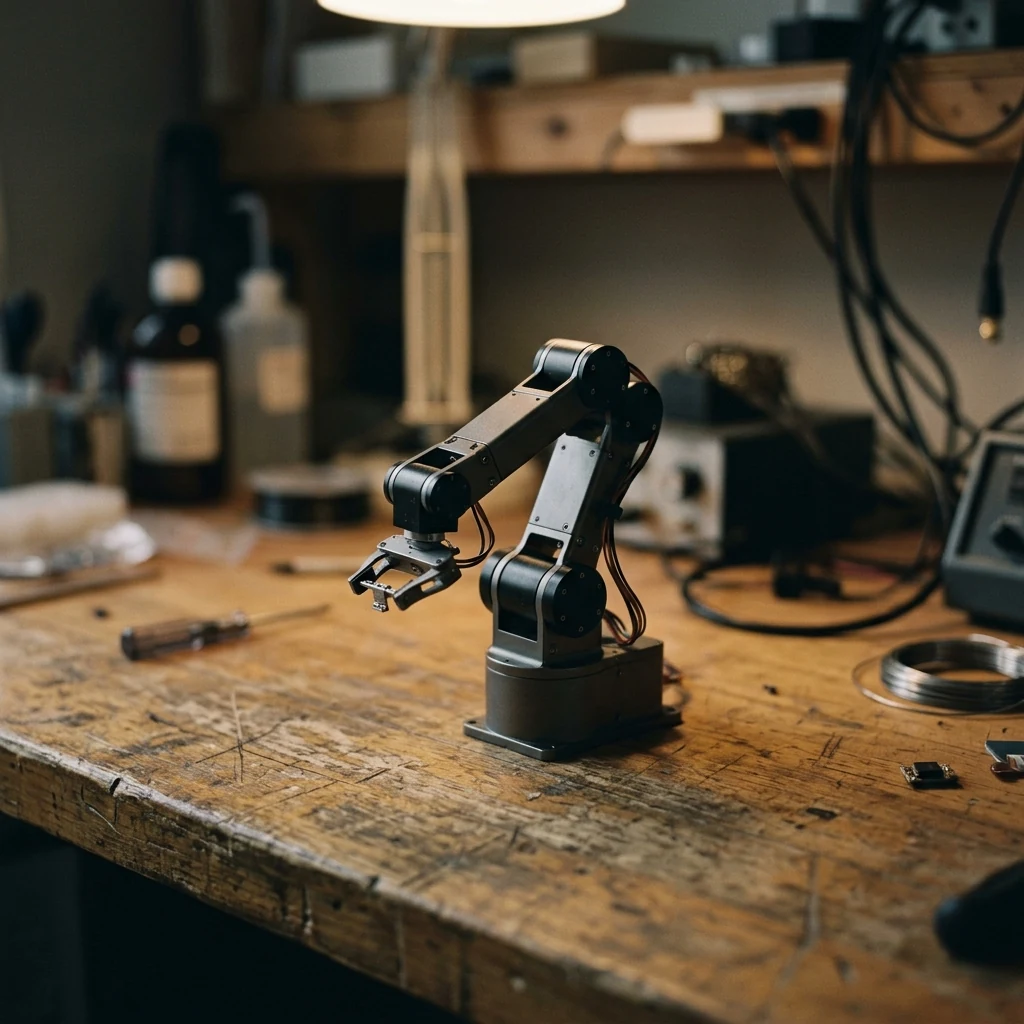
A researcher at University College London, Sarah-Jayne Blakemore, did the experiment in 1999. She built a small robot arm. The robot would tickle you, but only after you moved your own hand. If she set the delay between your hand and the robot to zero, the robot felt as un-ticklish as your own fingers. If she set the delay to a fifth of a second — too brief to consciously notice — the robot suddenly became ticklish. The brain, in that fifth of a second, lost the match. It stopped predicting correctly. It allowed the sensation through.

So the brain is always predicting itself. Every time you walk, your foot is feeling exactly what the cerebellum told it to feel a hundred milliseconds earlier. Every time you scratch an itch, the relief is half-arrived before your hand gets there. Every time you hear your own voice, the auditory cortex has already subtracted the sound it predicted from the sound you actually heard, which is why your own voice is so jarring on a recording — the recording contains the unsubtracted version. You walk through a world the brain has quietly cleaned.

You are walking around in a slightly muted world that you yourself muted, in advance, so that you could be a coherent person inside it. The cost of being able to control your own body is that you cannot be surprised by your own body. The cost of being you is that you cannot, in the strict sense, meet you.
This is the part nobody tells you.
It also explains, in a single sentence, why other people matter. You cannot tickle yourself. You cannot make yourself laugh the way a friend can. You cannot give yourself the small shock of being seen the way a stranger on a train does when they smile at your child. You cannot startle yourself awake at four in the morning the way a thought of someone you have not seen in years can. Your brain has, with great care, made all of that impossible from the inside.
Other people are the only thing the brain does not predict.

This is not a metaphor. The motor system is literally why a stranger's hand on your shoulder lands harder than your own. It is why the friend who tickles you and the lover who surprises you and the child who asks the question you were not expecting are doing something only they can do. Your brain has built a fortress of self-prediction precisely so that they could be the breach. They are the only breach.

And so you, running your fingers up your own ribs at the kitchen counter in the small awkward way of someone testing a fact, and so the brain, quietly subtracting the sensation before it arrives, and so the obvious truth that nothing is happening — are part of the same arrangement that makes it possible for a friend, later, to poke you in the side and make you yelp.
The brain admits, for a quarter of a second, that there is something out here that is not you.

You laugh.
That is the moment the brain treats as real.

That is the moment for which the muting was designed.