The Strangers You'll Never Meet Who Would Have Been Your Closest Friends
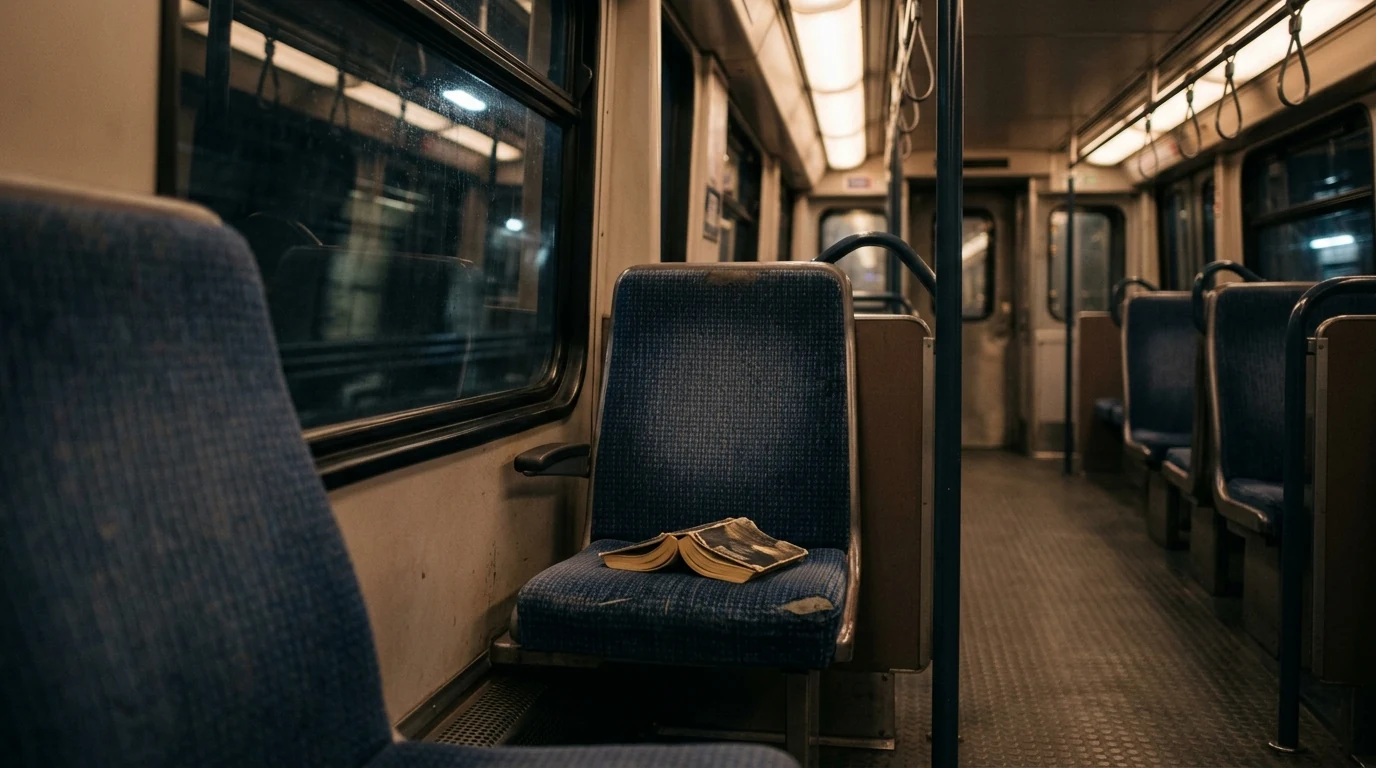
You are on the train. The Northern Line, southbound, 7:42 in the evening. A man sits across from you. He is reading a paperback book whose title you can't quite see. He is wearing the kind of jacket someone owns for fifteen years without thinking about it. He turns a page. He smiles slightly at something on the page. The smile is the smile of someone who has been told a joke they were not expecting.
He gets off at the third stop. You will never see him again. You will never know what the book was. You will never know what he smiled at. The smile is gone. The book is gone. The next train pulls away.

This is, statistically, one of the more important encounters of your week, and you will not remember it by tomorrow.

There are about eight billion people alive right now. A typical adult in a city physically passes a few thousand strangers a week. Over a lifetime, that is something like five million strangers. You will speak to a few thousand of those — at counters, in shops, on the phone, asking for directions, ordering. You will know the name of about a hundred and fifty. You will love perhaps a dozen. You will live with one or two.
Of the eight billion alive, then, you will know about a hundred and fifty. That is roughly one person in fifty million. The other forty-nine million nine hundred and ninety-nine thousand nine hundred and ninety-nine you will not know.

Among those forty-nine million strangers per friend, some, by sheer arithmetic, are the people who, with five minutes of unhurried conversation, would have become some of the most important people in your life. They exist. They are alive right now, somewhere. They are also on a train. They are also reading a paperback book whose title you cannot see. Their hairline is also receding in a way they have not fully accepted. They also have the small disappointment of having ordered the wrong coffee this morning. They also believed, at twenty-three, that they were going to write a novel.

You will not meet them. The Northern Line does not bring them to your carriage. The café where they have been a regular for nine years is on a street you will never have a reason to walk down. They were at a wedding two summers ago that you missed. They will not be at the funeral you attend next month. You will go through your entire life passing within ten metres of them, at most, three or four times, and not noticing.

This is, in the most precise sense, what it means to be alive at the same time as someone. Most of it is missing them.
You could let this make you sad. Some people do. The internet, occasionally, gets briefly obsessed with this idea — the friend you never met, the love of your life who took the other train. There is a small industry of beautifully shot films about this.

The films are correct about the arithmetic and wrong about the conclusion. The conclusion is not that you missed out. The conclusion is something else, which the films are not allowed to say because it sounds less romantic, but which is what is actually going on.

The friends you have are not, in the strict sense, the best people for you. They are the people who happened to be in the same room as you on a specific Tuesday when you happened to say a specific sentence and they happened to laugh at it. They are the people whom probability put in front of you, and who passed the very small test of being willing to keep showing up. They are not chosen by some hidden compatibility algorithm. They are the ones who survived the arithmetic.

But — and this is the part nobody mentions — the strangers you will never meet are the same kind of person. They, too, are people probability put in front of someone else, on some other Tuesday, in some other room. They are someone else's hundred and fifty. They are someone else's dozen. They are, somewhere, someone's one or two.
The friendship you have is not a failure of the great alternative friendship you might have had. The friendship you have is the one that survived. The strangers are not better; they are other. And they have their own ones and twos, and their own train carriages, and their own paperback books, and their own ten-metre passes with the people they will not meet.

And so the man across from you on the Northern Line, and so the paperback book, and so the small smile at something on the page, and so you, watching him without watching him, are doing the only thing two strangers can do for each other in a city of eight billion people: existing at the same time, briefly, and then not.

He gets off at the third stop. You stay on. The next stranger sits down where he was.

You nod at her.
She nods back.

It is the closest the two of you will get.

It is enough.