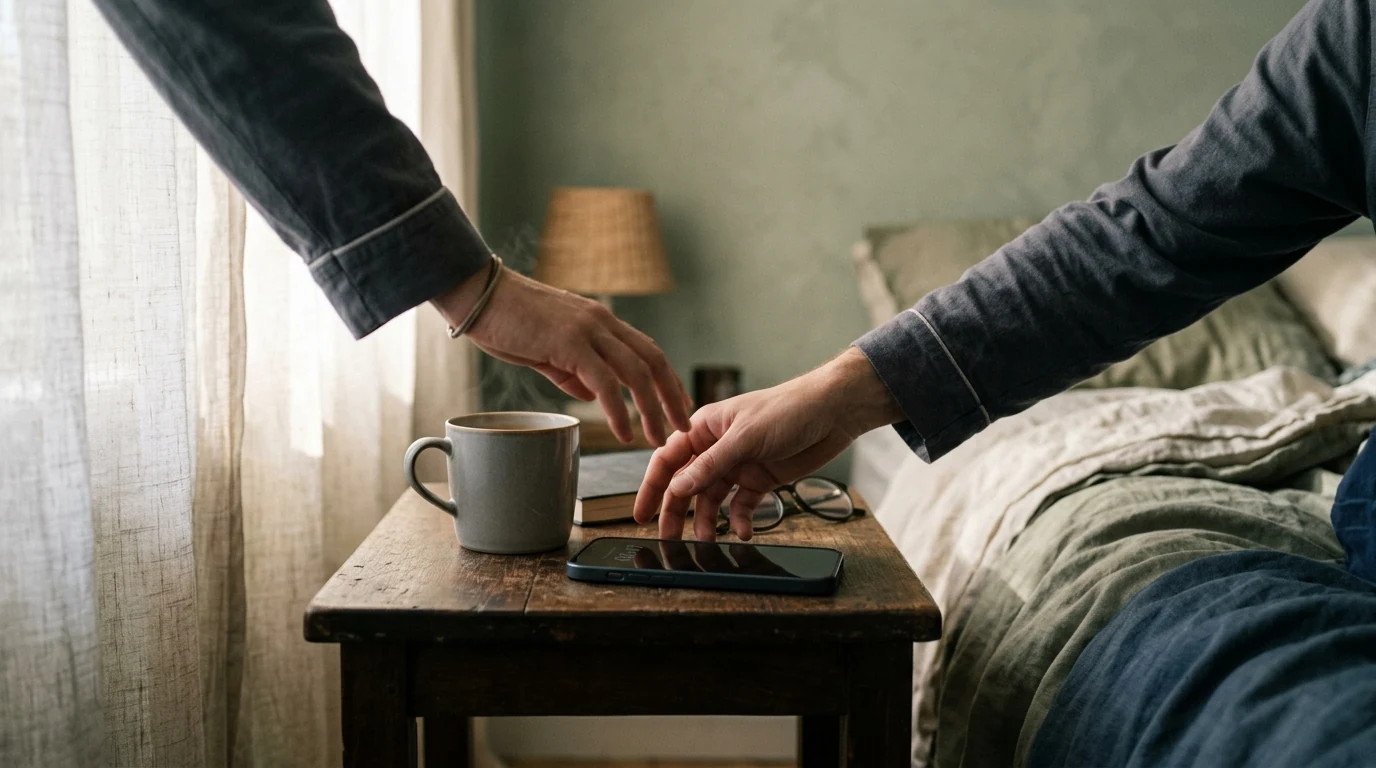
Notifications as the New Prayer
You wake up. The first thing you do — before stretching, before drinking water, before going to the bathroom — is reach for your phone.
You do not decide to. The hand goes.
You check messages. You check notifications. You check email. You check the news. You check a social app, then another social app, then back to the messages in case something arrived in the last twenty seconds. You have not been awake for ninety seconds. You have already presented yourself, several times, before the screen.
You have just made the same gesture that hundreds of generations of humans, before you, made in the first minutes of being awake — looked toward something larger than themselves, and presented themselves before it.
Their gesture was prayer.
Yours is checking notifications.
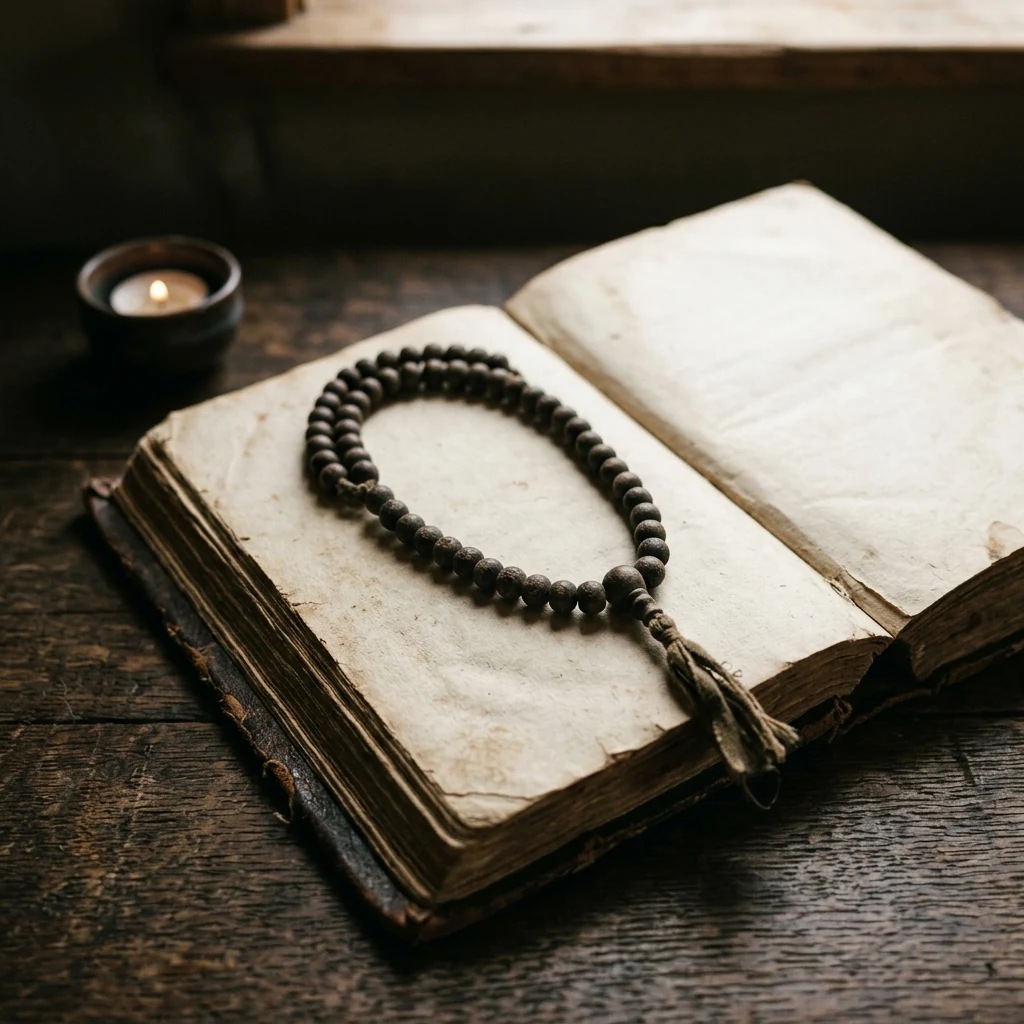
These are, biologically and psychologically, the same gesture.
The motor habit of religious practice — short, regular, time-bracketed moments oriented toward elsewhere — is one of the most consistent features of human cultures across history. Muslim daily prayers, five of them, at the major hinges of the day. Catholic and Orthodox crossings before meals, before journeys, before sleep. Buddhist niệm Phật on a string of beads worked through the fingers in spare minutes. Hindu puja before the small shrine in the kitchen. Jewish blessings before bread, before wine, before relieving oneself. Folk practices the same shape everywhere: brief, frequent, oriented.
The average smartphone user checks their phone every four to six minutes during waking hours. That is somewhere between a hundred and fifty and two hundred and thirty times a day. The check itself takes about three to five seconds. The motor habit is short, regular, oriented toward elsewhere.
The same shape, at the same intervals, with the same motor pattern, in the same brain.
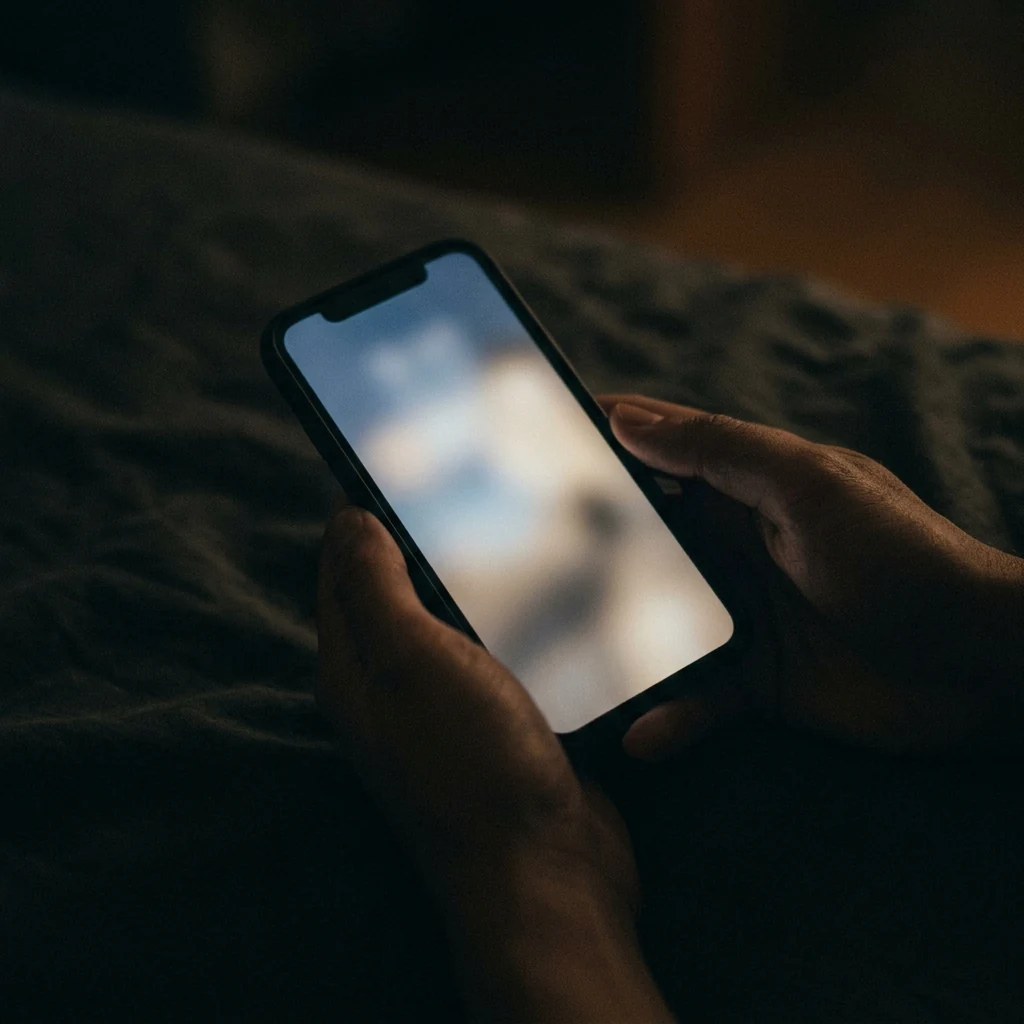
The neuroscience underneath is now well-charted. Variable-ratio reinforcement — the schedule that makes slot machines so compulsive — is the schedule on which notifications arrive. Some checks reward, most do not, the schedule is unpredictable, the brain learns to check more. The rosary in the fingers of an elderly monk is on a fixed-ratio schedule, one bead one prayer, which is psychologically less compulsive. The phone is more efficient.
What is genuinely interesting is what each system provides.
Religion gave its users, broadly, five things. A sense of being attended-to by something larger. A daily structure with named hinges. A personal record of one's place in time. Permission to interrupt almost anything. And a vocabulary for one's worst hours.
The smartphone gives its users the same five.
The notification is the message somebody is thinking of you — even if, increasingly, the somebody is an algorithm. The lock screen tells you the time, the day, the date, the weather, the news, what your next meeting is, who has remembered your birthday. The activity log records, with terrifying fidelity, your every step and every glance. The notification badge is permission to interrupt anything, including yourself. And the algorithm, when you are at your worst, finds you content that names what you feel — sometimes more accurately than the people who love you can.
You can argue, if you like, that the smartphone is a worse provider on every axis than what it replaced. You can argue this in some technical sense, and you will be right.
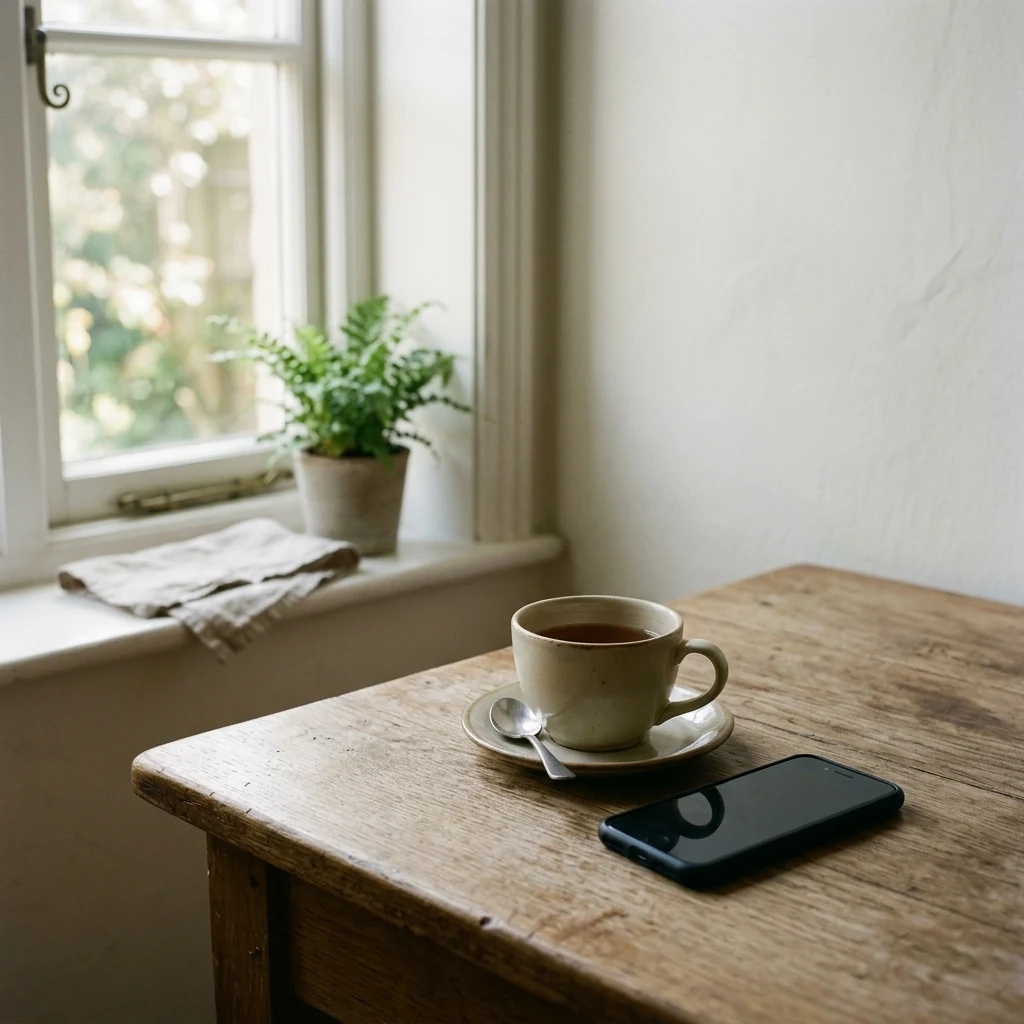
But the brain is not making that argument.
The brain is using the smartphone the way it used to use prayer, because the brain found a more efficient harvest mechanism for the same psychological needs, and the brain did what brains do when they find more efficient harvest mechanisms.
The unsettling implication — and this is the move the essay needs to make — is that the secular person sneering at the religious person for needing prayer is sneering at someone doing the same thing they do, just toward a less sophisticated mechanism. Religion, at least, named the thing it was. The smartphone has not had the decency to.
And so you, glancing at your phone for the eleventh time this hour — not because you need information, but because you need to be looked-at by something — are performing the most ancient gesture the species knows how to make, in the most modern uniform the species has ever worn.

You put the phone down. You pick it up again seventy seconds later. You put it down. You pick it up. There is nothing new. You put it down.
In the morning you will not remember any specific notification. The morning was not what the gesture was for.
Tonight you will check the phone again, eight or ten more times, with no expectation of meaningful news. Tonight, also, was not what the gesture was for.
You are praying.