
Productivity Guilt Is the Residue of a Religion You No Longer Believe In
A Saturday afternoon. You have nothing pressing to do. You have, in fact, deliberately cleared the afternoon for rest. You sit down on the sofa. You open a book. You read three pages.
You are restless.
You think: I could be doing something useful.
The thought is faintly accusatory, in a way you cannot exactly source. You try to read another page. The accusation gets a little louder.
You eventually put the book down, get up, and reorganise the spice rack. The spice rack did not need reorganising. The afternoon was supposed to be rest. You have just lost an hour of it to a small sourceless guilt that you could neither identify nor ignore.
You did not call it a religious experience. But it had the shape of one.
The argument has, helpfully, already been made.
The German sociologist Max Weber published The Protestant Ethic and the Spirit of Capitalism in 1905. The argument runs roughly like this. Calvinist theology produced an anxiety: there was no way to know in this life whether you were among the elect — those predestined for salvation — and there was no sacrament that could reassure you about it. In that anxious vacuum, a culture developed in which constant productive labour became the mark of an elect life. The work was not for money. The money was a sign that the work was sanctified. To rest visibly, to spend visibly, to enjoy visibly, was to flirt with the suggestion that you were, after all, not among the elect.
Three centuries later, almost nobody in the secular West believes the underlying theology. The behaviour continued.
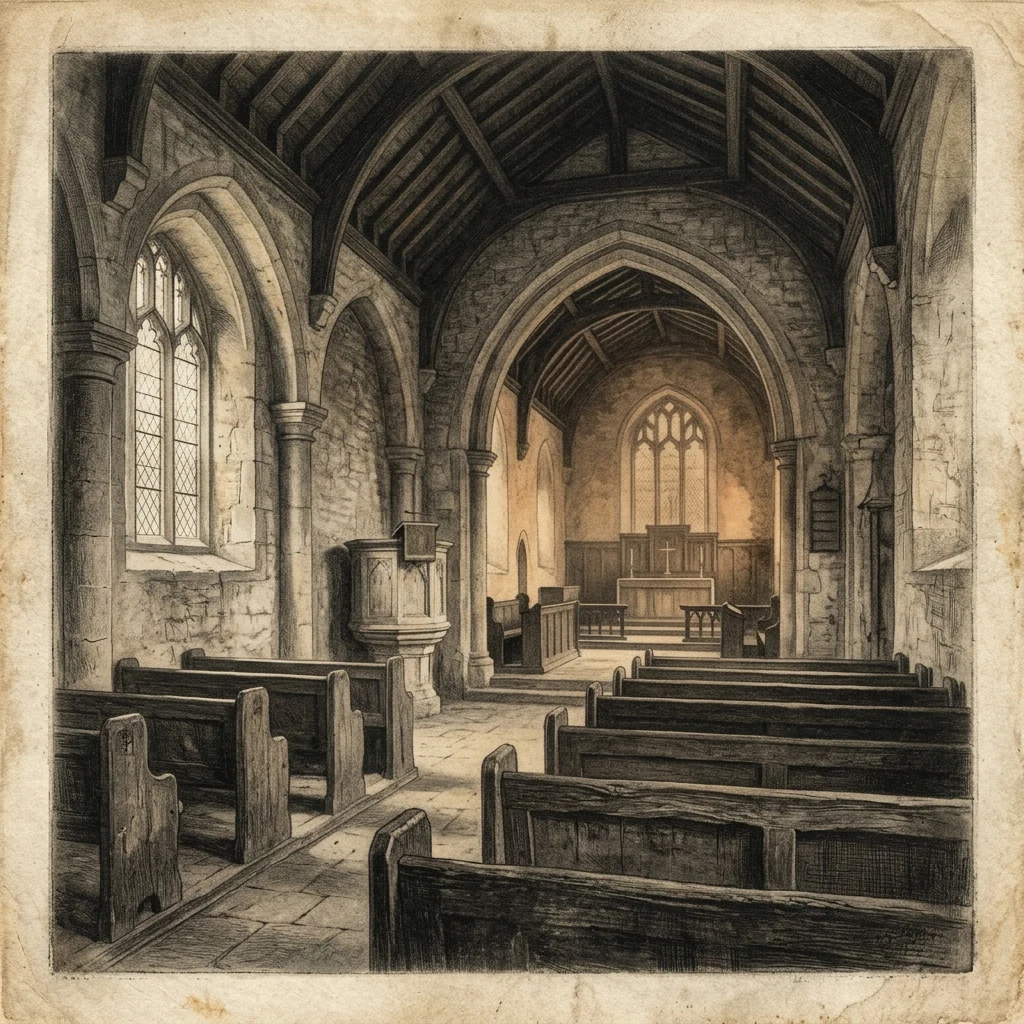
The Protestant work ethic outlived Protestantism. The cathedral fell down. The obligation to glorify God through unceasing useful labour migrated, intact, into the nervous system of the post-Christian person, where it now appears to them as a personality trait.
I just cannot sit still.
I always need a project.
I feel terrible if I am not being productive.

The I just cannot is the residue. It is a religious obligation that has lost the religion and kept the obligation. The lost theology has not been replaced by anything new; the brain has simply kept the structure. The structure is older than the conscious self. It predates the language you would use to describe it. It predates the language you would use to argue with it.
The cruelty is that you cannot reason your way out of it. Telling yourself rest is also important works for thirty seconds. The structural feeling — I should be doing something — returns within the hour, because the structure is older than the part of you that thinks.
You can see the same residue elsewhere. The dieter who feels morally weakened by a piece of bread is being weighed by a religion they no longer name. The runner who feels they owe the run is paying tithes to it. The parent who feels they should be making memories with the child rather than just sitting in the room with the child is being asked to demonstrate elect parenthood. None of these guilt-objects are personality traits. All of them are residues.
To rest, in a culture whose religion has migrated entirely into work, is an actively transgressive act. To rest is to refuse the residual god.
Almost no one in this culture has the equipment to do it cleanly.
The training was thorough. The training began before the child could read.

The vocabulary for what we are refusing to do has been lost.
We are refusing to do something — we no longer remember what.
And so the small constant guilt that you carry, on a Saturday afternoon, for not doing anything productive — is not a personality trait. It is the residue of a religion you no longer believe in but cannot stop practising. And so you, on the sofa, feeling like you ought to be reorganising the spice rack — are praying to something whose name you have forgotten.
You go back to the sofa. You sit. You open the book. You read three pages. The guilt arrives.
You let it.

You read another three pages. The guilt is still there. You let it sit in the room with you, like an old relative who has nothing to say.
You read another page.
Eventually it goes. Or it does not go, but you stop noticing it.
The afternoon passes. The spice rack remains slightly disorganised. The book is, by Sunday evening, half-finished.
Nothing has been produced.
Something has been done.