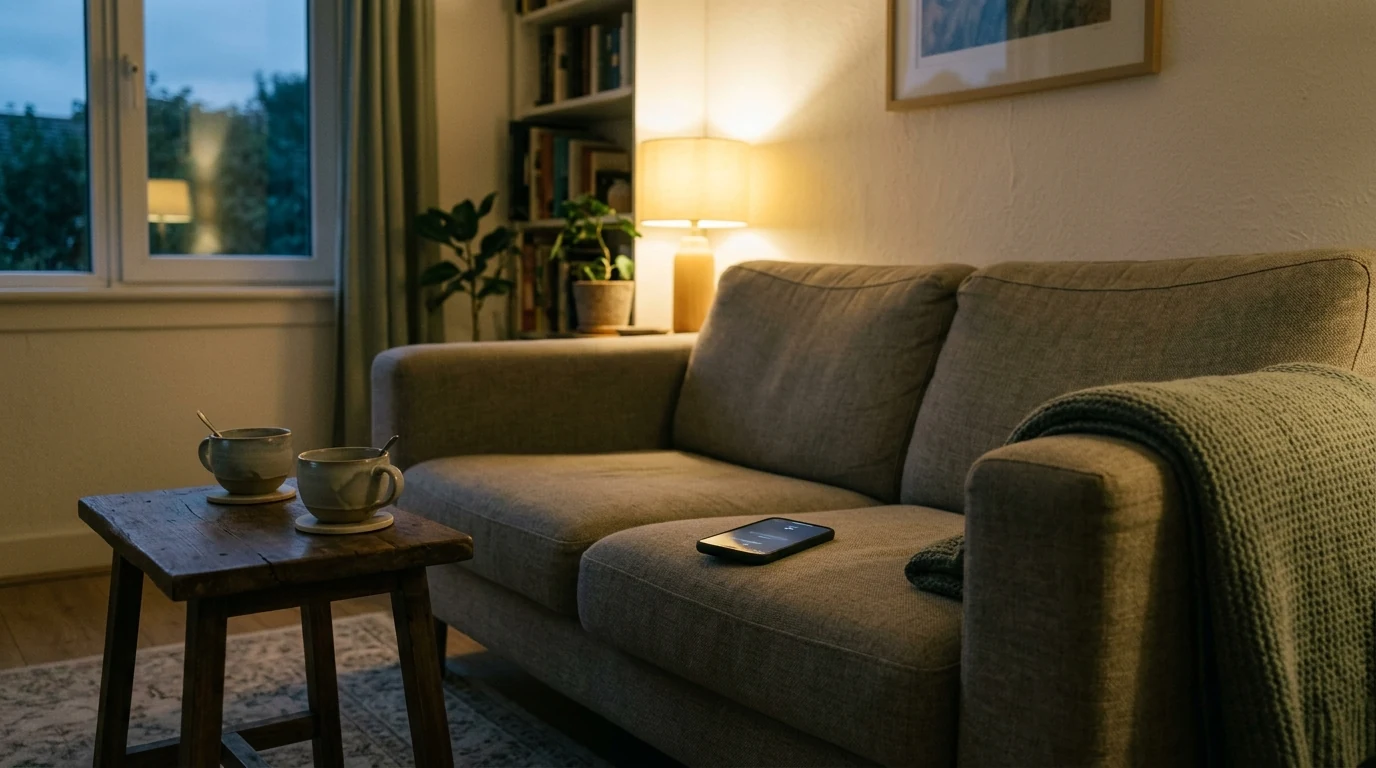
On the Metaphysics of the Wi-Fi Password
You are at a friend's house. You have just sat down on the sofa. The conversation has barely begun. There is a small ritual to perform first.
What's the Wi-Fi password?
Your friend stands up. Walks to the kitchen. Looks at the back of the router. Comes back. Says a string of characters that is some combination of their dog's name, their old street number, and a punctuation mark.
You enter it. It does not work. You ask again. The capitalisation was wrong.
You enter it again. The phone in your pocket goes from one quiet anxiety to a different quiet anxiety — the anxiety of being almost-connected. The bars appear. You are in.
The conversation can begin.

You have just performed one of the small daily rituals of modern hospitality. Neither of you noticed.
Hospitality is one of the archaeologically deepest human practices.
The exchange between host and guest — bread, salt, water, fire, shelter, the offering of a name — is documented in every culture in every century where there are documents. In the Mediterranean tradition: bread and salt at the door. In the steppe traditions: the bowl of mare's milk handed across. In the Vietnamese tradition: trầu cau at the threshold; for the more contemporary household, the cup of tea poured before you have even taken off your shoes. In the Anglo tradition: tea, then biscuits, then would you like to use the bathroom. All of these are the same small ceremony, performed in different languages, between two people who have entered a brief contract of mutual care.
The Wi-Fi password is the current instance of the same ceremony.
The asking is a small admission of dependence: I cannot exist comfortably in this house for the next two hours without the network. The giving is a small admission of trust: I am letting you into the cable that pays my bills, that recommends what I watch, that knows what I buy. The pause while the host walks to the kitchen and reads the back of the router is the modern equivalent of being shown to the well. The well has, in the last twenty years, moved into the cupboard above the fridge.
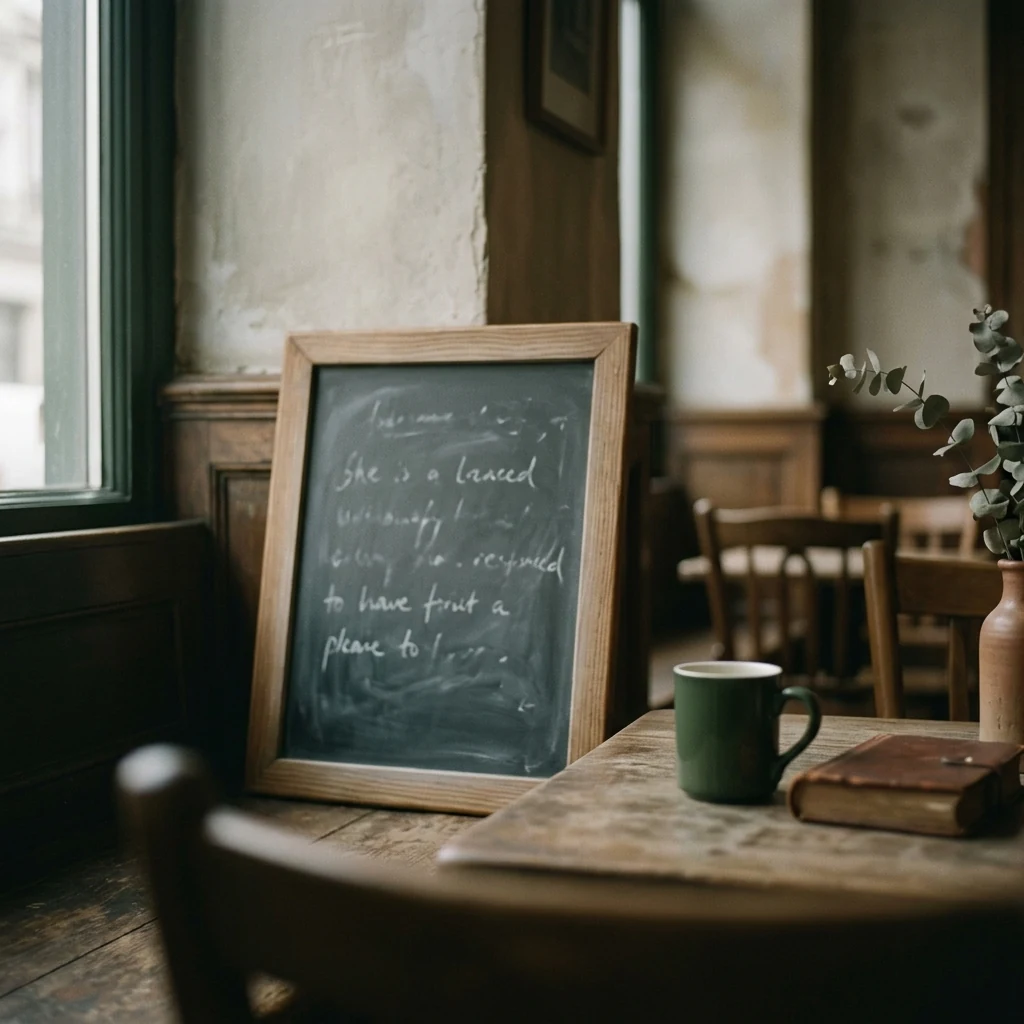
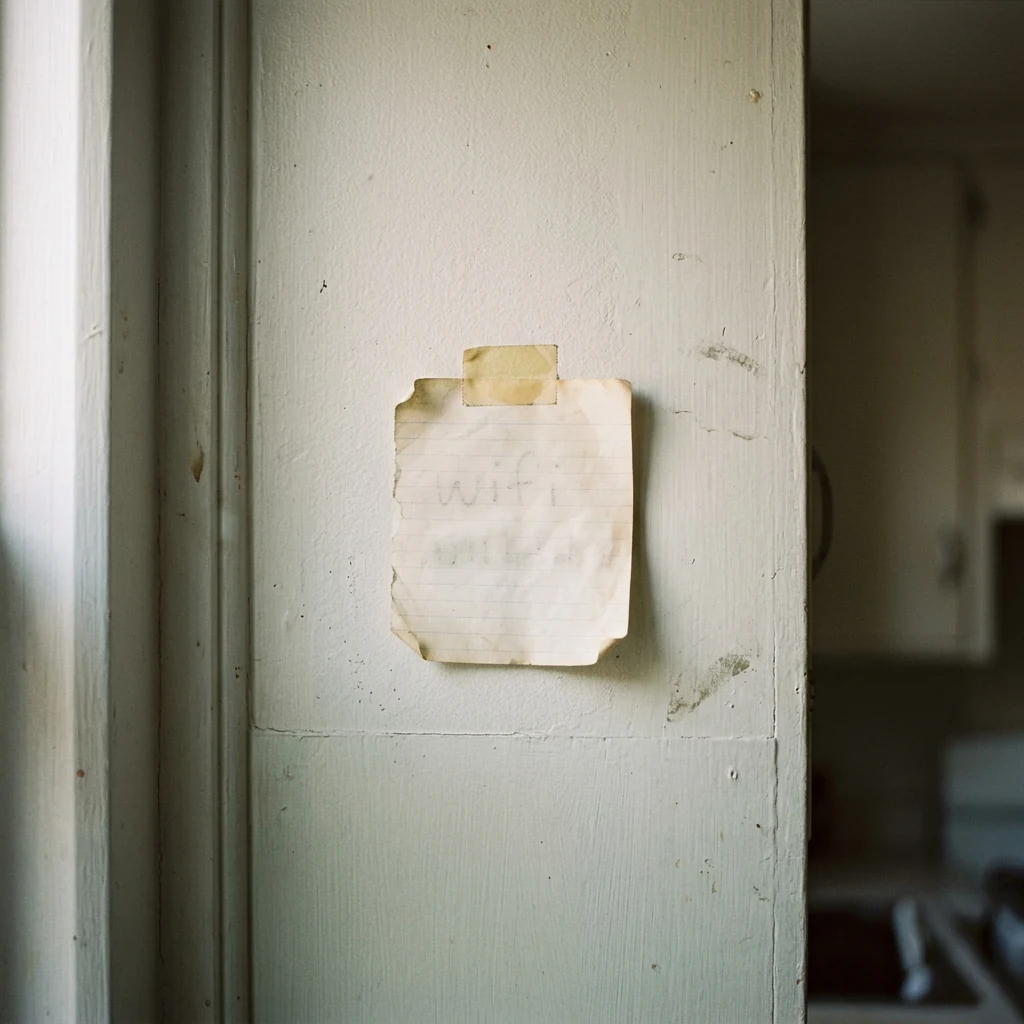
There are little ritualistic elements that have already appeared. The QR code printed on the napkin holder at a café, which lets you avoid the asking entirely. The chalkboard at the new co-working space that reads, in considered lower-case, guest wifi: welcome123. The handwritten Post-It on the bathroom mirror at the Airbnb: the password is on the modem, please don't change it. These are the small social codings of the practice of letting strangers into a space.
The deeper observation — and this is the one the essay needs to make before the laugh — is that the Wi-Fi password has come to replace some of the older obligations of hospitality. We no longer routinely offer guests bread and salt, water from the well, the warming of their feet. We offer them connectivity. The host is no longer the one who feeds you. The host is the one who connects you. We did not know we were going to make this trade.
The unintended consequence is funnier than it ought to be. A guest who is connected stops, in some technical sense, being a guest. The connected guest is, on paper, in someone else's living room — but they are also in their email, their bank, their messages from someone in another city. The Wi-Fi password makes the visitor halfway present.
Hospitality, in the smartphone age, is the offering of partial presence. The password is the contract that makes the partiality acceptable. Both of you know what is happening. Both of you keep happening.
And so the Wi-Fi password is the modern bread and salt — and so you, at the friend's house, entering a string of characters that combines their dog's name and the year their parents got married, are doing what hosts and guests have always done at the threshold of a house: a small ceremony confirming that the visitor will not, in the next two hours, starve, be parched, or be cut off.
You are connected. The conversation continues. Halfway through it, your phone vibrates in your pocket. You do not look at it. You do not need to. The knowing that you could is enough.
Later, leaving, your friend says: text me when you're home. You say I will. You both perform the next ritual.
You walk to the car. Your phone drops off your friend's Wi-Fi — the bars vanish for a second, and then return as four bars on the wider city network of barely-paid-for connectivity, and you are, technically, no longer halfway in your friend's life.
Tomorrow you will host someone. You will give them the password. The password is currently what it has been for four years: your dog's name and a punctuation mark.
You will not change it.
The password is the closest thing the house has to a key.