Photographs Are the Only Proof You Were Ever as Young as You Were
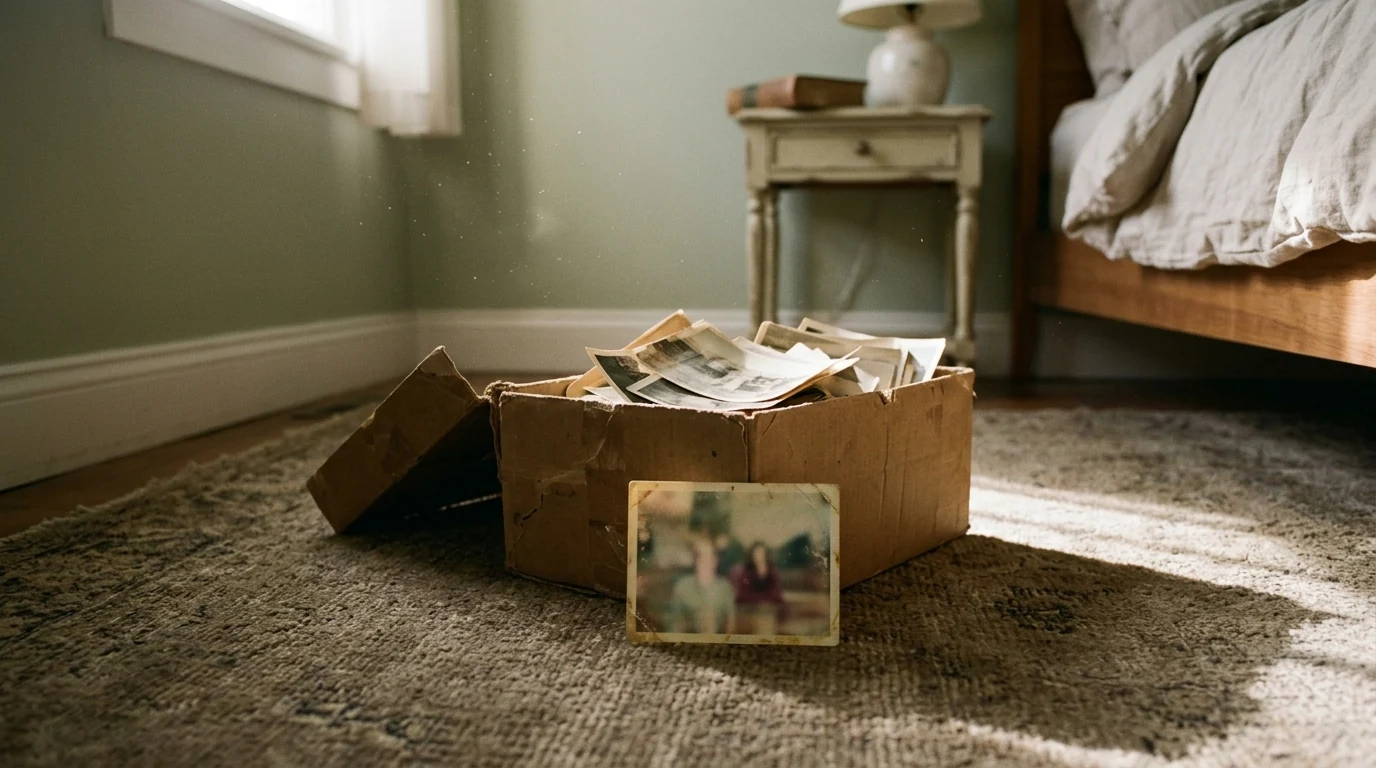
You are at your parents' house for a weekend. Your mother has been saying for years that she means to scan the photographs in the cardboard box at the top of the wardrobe. You bring it down. You sit on the bedroom floor with your back against the bed frame. You open the lid. The smell is something like dust and old chemistry — faintly sweet, faintly chemical, the residue of decades of slow change in a sealed box.
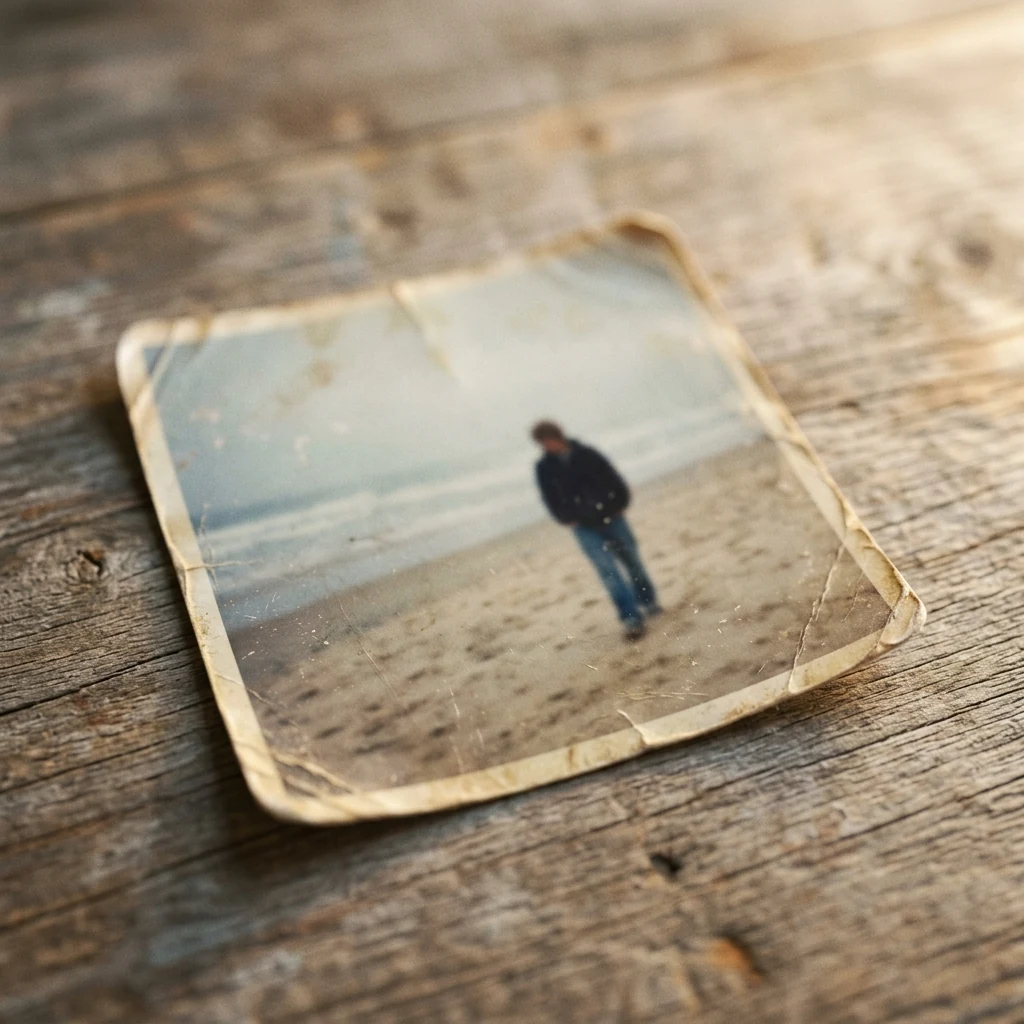
You don't recognise half the people. There are weddings of relatives who are now dead, holidays of cousins who are now strangers, a great-aunt holding what might be a chicken. Then there is one of you, aged seventeen, on a beach you have no memory of going to, wearing a t-shirt you have no memory of owning, smiling at someone behind the camera who you have no memory of being there.
You stop. You hold the photograph by its corner. The person in it has your face. You believe you remember being seventeen. You cannot remember this.
Photography is roughly two hundred years old. Before it, the only people who had likenesses of their younger selves were the wealthy enough to be painted, and the paintings were already half-fictional — flattering, posed, idealised, a record of what the sitter had been seen as rather than what the sitter had looked like. Everyone else had nothing. A face passed through your life and went out of it, and you were left with a description you could not check against a surface. Memory was not corroborated; it was just memory. If the memory drifted, no one knew, including you.
The chemistry of a photograph is unbelievably literal. Light strikes a silver halide grain. The grain changes — an electron moves, a bond shifts, the crystal is no longer the same crystal. The change is then fixed by another chemical step so the grain will stop changing. A photograph, in the strict sense, is the actual surface of a moment: the actual photons that bounced off the actual body of that seventeen-year-old, captured in actual chemistry, then preserved in a form that resists further alteration.
This is not a likeness. This is a recording. A trace.
Digital photography keeps the same logic, only with silicon instead of silver. Photons strike a sensor. The sensor counts them. The count is stored. The chemistry has been replaced by arithmetic, but the principle is the same: something physical happened, and the happening was preserved past the moment of its happening. The body that was photographed is gone in both cases. The body that did the photographing — the sensor, the film, the lens — has also moved on. Only the record holds.
Two centuries is also nothing. Humans have been forgetting their younger selves for two hundred thousand years. For 99.9 percent of that time, the face of you at seventeen would have been lost as soon as the people who knew it died. You would have grown old believing you had once been a child, but with no way to prove it to yourself, and no need to. The photograph is not how humans evolved to remember. The photograph is a recent intrusion of physics into a system that was never designed to keep the past around. Your grandmother, holding a photograph of her grandmother as a young woman, is doing something no human did until about six generations ago. The strange thing is not that we forget. The strange thing is that we ever started keeping receipts.
And so the silver darkens at the touch of light, and so the sensor counts the photons, and so you, sitting on your parents' bedroom floor with the dust of someone else's wedding settling on your jeans, realise the seventeen-year-old you are holding is a person you cannot reach, cannot warn, cannot apologise to, cannot ask anything of — and the photograph is the only proof they were here.
You cannot return there. You cannot put a hand on that t-shirted shoulder. You cannot tell the boy or girl on the beach what is coming, and even if you could, they would not believe you, because the news from the future never arrives in a recognisable form. They would think you were a stranger making a strange joke. They would smile politely and go back to the water.
The photograph does not require this of you. The photograph is not asking you to do anything. It will not be filed, optimised, archived, made useful. It is not a project. It is not a task. It is a small rectangle of chemistry that holds the only physical evidence that a body you no longer have once stood on a beach you do not remember and smiled at someone whose name has fallen out of your head.
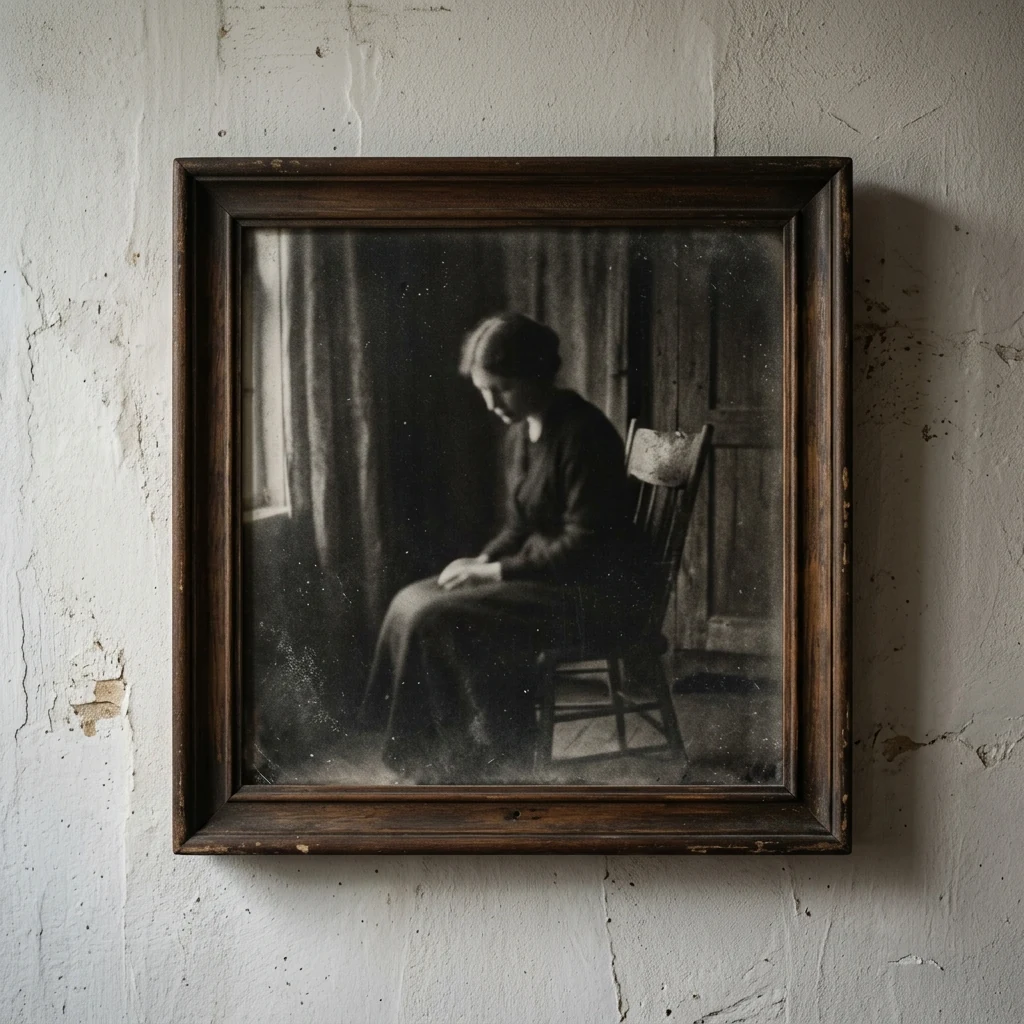
You put the lid back on the box. You leave it on the floor for now. You will not scan the photographs this weekend either.
In the kitchen your mother is making tea. She has been making tea since before you were the seventeen-year-old on the beach. The kettle clicks off. The cups come down from the cupboard. The water hits the leaves and the leaves open. You sit at the table. She sits at the table. Outside the window it is beginning to get dark in the slow honest way of late afternoon in a house that has been here longer than you have.
Something has been kept.
Nothing has been done.