
On Small Kindnesses You Will Never Be Able to Repay
The barista at the coffee shop you went to every morning for two years. She started making your drink the moment you walked in. You never asked her to. She did not tell you she did this. You did not, in any conscious way, register that she did this — you just sometimes noticed, dimly, that your coffee arrived faster than other people's, and you sometimes wondered why, and you sometimes didn't wonder. One Monday she wasn't there. Another woman was at the counter. You ordered the drink the new woman didn't make for you. You did not ask where the first barista had gone, because asking would have made it strange — you didn't know her name, you didn't know her hours, you knew nothing about her except this one small fact, which was the fact you didn't know you knew.
Three months later you walked past the coffee shop and a sign said the place had closed. You don't know where she went. You never said thank you.
Humans gave each other things long before there was money. The earliest debts were not numerical. They were between specific people — you owe me, I owe you, this small thing today, that small thing six months from now. There was no clearing. The debt was the relationship. To insist on settling it would have been to dissolve what the debt was holding in place.
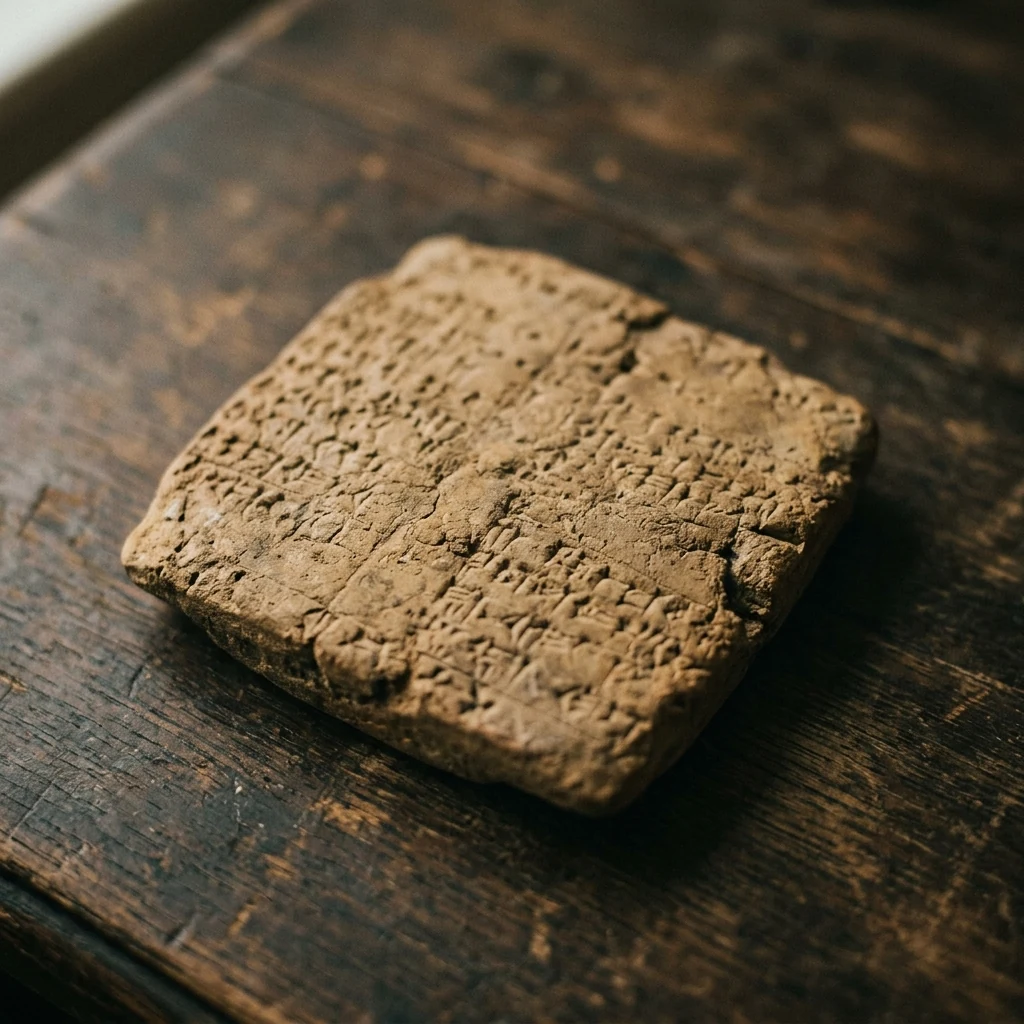
Then around five thousand years ago, in a place we now call Mesopotamia, somebody invented a way to make debts portable. You could now owe a person you did not know, or owe through a chain of people none of whom owed each other, and the number on the clay tablet was the whole relationship. There was no relationship beneath the number. This was a useful invention. It enabled cities. It also created the modern intuition that debts are for clearing.
The small kindnesses of your life do not work like that. They predate the clay tablet. The barista did not give you a service. She gave you a small piece of attention. You cannot return attention in the way you return a borrowed book. You can only give attention to someone else, who can only give it to someone else after you. The thing flows outward but does not return. The number on the tablet is never zero, because there is no tablet.

This is true, in different doses, of every small kindness you have ever received. A friend at twenty-three who said one short sentence that broke the bone of what you were carrying. A stranger on a train who gave up their seat without being asked. A teacher who said something exactly true to you at the right age and never knew it landed. A coworker who covered a shift you didn't know you needed covered. A grandparent who slipped a folded bill into your hand at every family gathering for years and never made a thing of it. Some of these people are dead. Most of the others would deny doing it. The debt does not close.
And so the small kindness floats out into the world like a coin no one will ever cash, and so you, twelve years on, with a cup of coffee made by your own hand in your own kitchen and a sky outside turning toward evening, realise that the debt is not for paying — the debt was the gift.
You can name three people right now whose small kindness you will never be able to repay. Two of them are gone — moved, dead, simply absent from your life now. The third would deny doing it if you tried to bring it up. The debt is open. It will remain open. This is not a failure of accounting. This is what kindness is.

You will be on the other side of this. You have already been on the other side of this. There are people walking around right now carrying something you said to them at twenty-three, that you do not remember saying, that they will never tell you about. They are not, in any meaningful sense, in your debt. The kindness was not less real for being unwitnessed. The kindness did not need to be witnessed.
Outside the kitchen window the city is doing its small noises. Somewhere out there, three people you will never know are carrying something you gave them. Somewhere out there, three people who gave you something they do not remember giving are still doing what they were always going to do anyway.
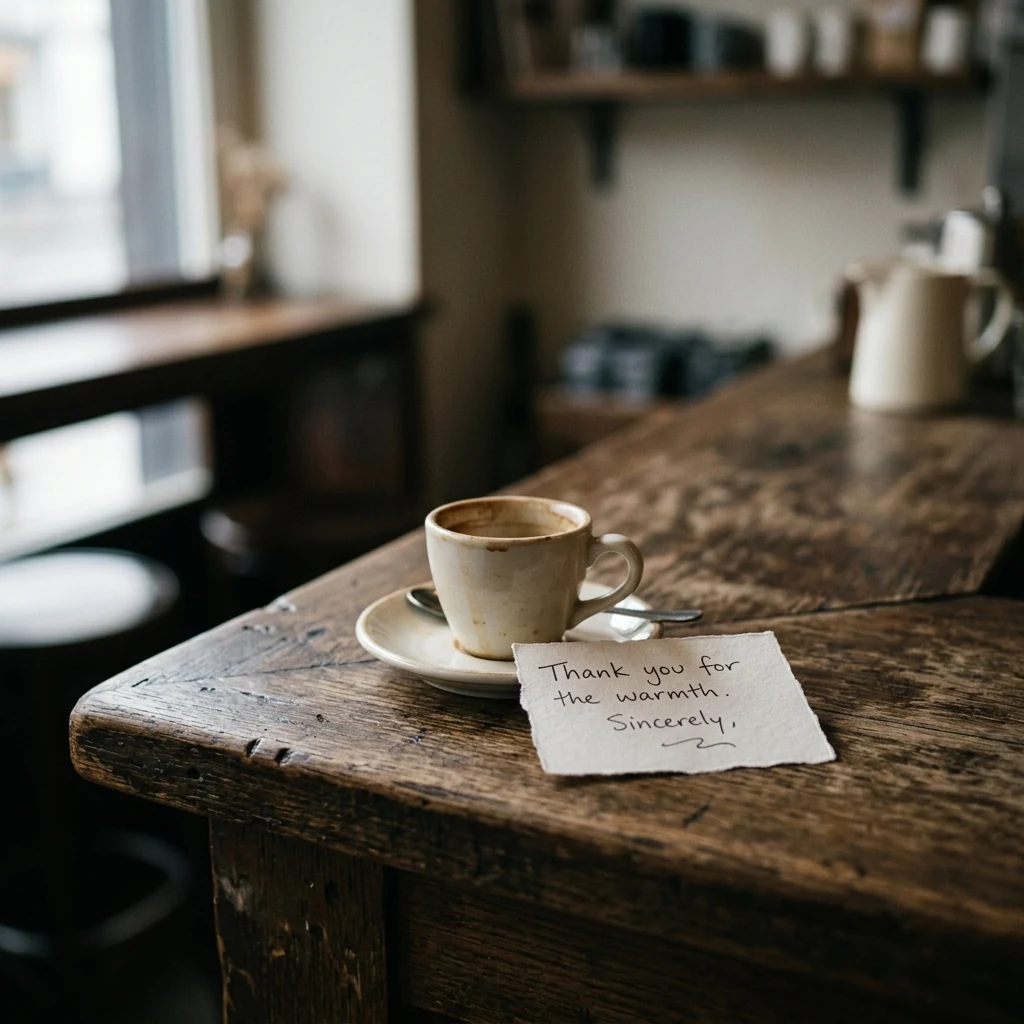
The debt is not for paying.
The debt was the gift.