
On Missing People Who Are Still Alive
It is 11:47 on a Wednesday and you are in bed, scrolling your phone, doing the thing you swore you would not do this week and have done every night of it. The phone has surfaced a photograph from some years ago. In it, you and a person you used to be very close with. They are laughing at something off-frame. You can almost remember what it was. Almost.
You have not spoken to this person in three years. Possibly four. You do not know why. Neither of you did anything wrong. There was no fight. It just stopped.

Your thumb hovers above the screen. The screen dims, then brightens again because your thumb moves.
You could text them right now. You will not text them. You have not, on any of the several hundred similar nights of the last four years, texted them. You have lost the muscle. You no longer know what the opening sentence would be.

You put the phone face-down on the duvet.

The death of an active friendship is, in almost every case, not a death.
Nobody fights. Nobody declares anything. There is no funeral, no obituary, no last call. There is just a series of weeks that becomes a series of months that becomes the eventual discovery, with no specific date attached, that you have stopped texting this person and you have not texted them for a very long time.

The neuroscience supports this from a different angle. Anthropologists have a number — Dunbar's number — for the upper bound on stable, active relationships a person can maintain at once. It comes out at around 150. Beyond that ceiling, the brain does not just refuse new connections. It also lets old ones go dormant. Not gone — dormant. Held at a distance the daily cognition can no longer afford to keep warm.
You have, by middle age, accumulated several hundred such dormants.

The schoolfriend who moved cities at the end of secondary school and who you swore you would visit. The college roommate who, for two years, you spoke to every day. The colleague from a previous job that you used to drink with weekly, who knew the precise shape of every grievance you had with the previous boss. The girl from that summer abroad who you imagined, with the conviction of an idiot, would be in your life forever.
Every one of them is still alive somewhere, doing something, going on without you. Most of them, you assume, have a vague sense of you being out there too. None of you act on it.
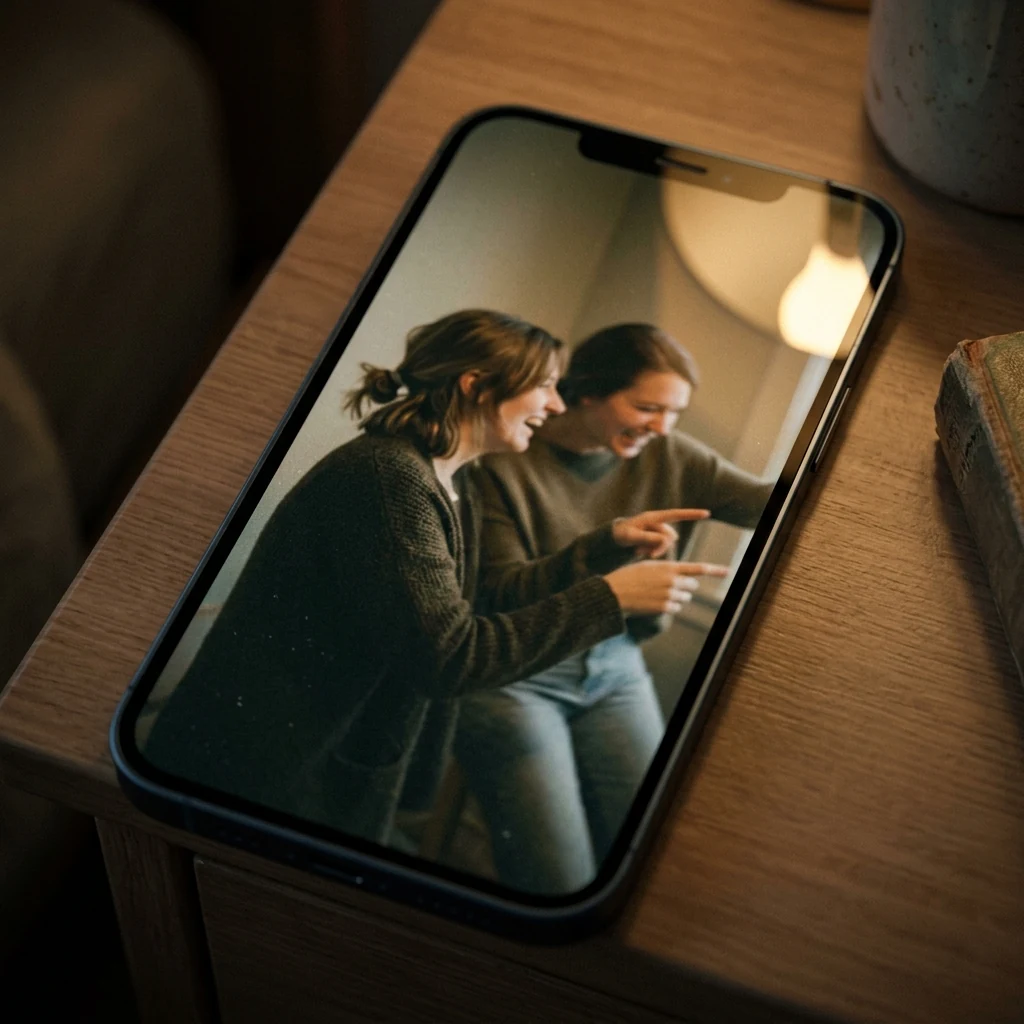
This is not anyone's fault. The brain is built this way. We were not built to keep five hundred people warm in our daily attention. The Pleistocene didn't run on Facebook.
But — and this is what the late-night phone scroll surfaces — the death of an active friendship is invisible while it is happening.

There is no specific Tuesday on which you and your once-closest friend stopped being close. You did not look up at a particular ceiling and decide. They did not stand in their kitchen with a glass of water and decide. The relationship died in increments so small that nobody was present at any of them. The increments looked, at the time, like ordinary scheduling. I'll call them next week. We'll definitely see each other in the autumn. I'll reply when I'm less busy. And then one morning you noticed, vaguely, the way you notice that a tooth has gone slightly grey, that you had not heard from this person in a long time.

You drifted across the line some month. You do not know which.
This is grief without a death.

There is no body to bury. There is no closure available. The person could text you back at any moment — they are alive, they have a phone, the same phone you have, with the same green button. The fact that they don't text you and you don't text them is a decision both of you keep making, every day, without ever having decided to.

And so you have a private archive of the still-living, accumulating quietly in a back room of your brain you do not visit on purpose. Most of them are people you would have, once, called your best friend. And so you, at 11:47 on a Wednesday, holding the phone above your face in the dark and looking at a photograph of a person who is alive and four thousand miles away — are doing the only thing the brain knows how to do with this kind of distance, which is nothing.

You set the phone down. You do not text them. You will not tomorrow either.
The room is dark. The fridge in the kitchen hums its single note. Somewhere this person is also doing something completely ordinary — brushing their teeth, reading a book they will not finish, walking down a street with a name you do not know. They have not thought of you today. You know this and you do not mind.

You turn off the screen.
In the morning the phone will hold a different photo at the top of the scroll, and a different ghost. There are, you think, more ghosts than friends now. There will be more next year.

You sleep.
Sibling essays
in conversation with this one