You Are a Story Your Brain Tells Itself to Feel Like a Single Thing
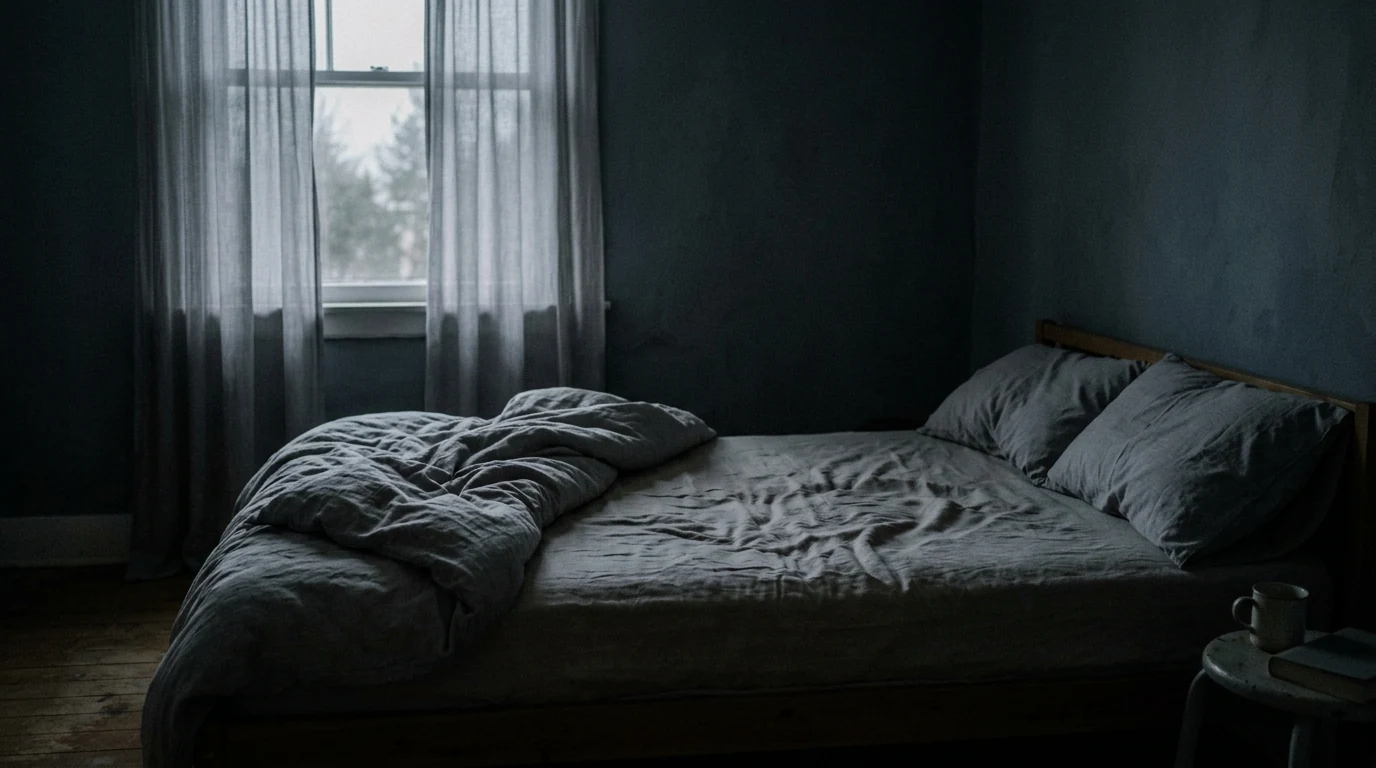
The first thing you become aware of, in the morning, is that there is a ceiling. There is a duvet. There is, somewhere underneath you, a body. None of these things have a name yet.
For a small fraction of a second — maybe a quarter, maybe a third — there is no you in the room either. There is only the equipment, idling. The body breathes. The eyes adjust. Something is happening in the dim glow above your head, but the part of you that would normally narrate it has not yet arrived.
Then the rest of you arrives, the way a busy office arrives at nine in the morning. The lights come on. The systems load. You remember — oh, right. Me. You remember your name. You remember what day it is. You remember that there is a meeting at ten and that you have not yet replied to the email from the woman in accounts.
But who, exactly, just loaded?
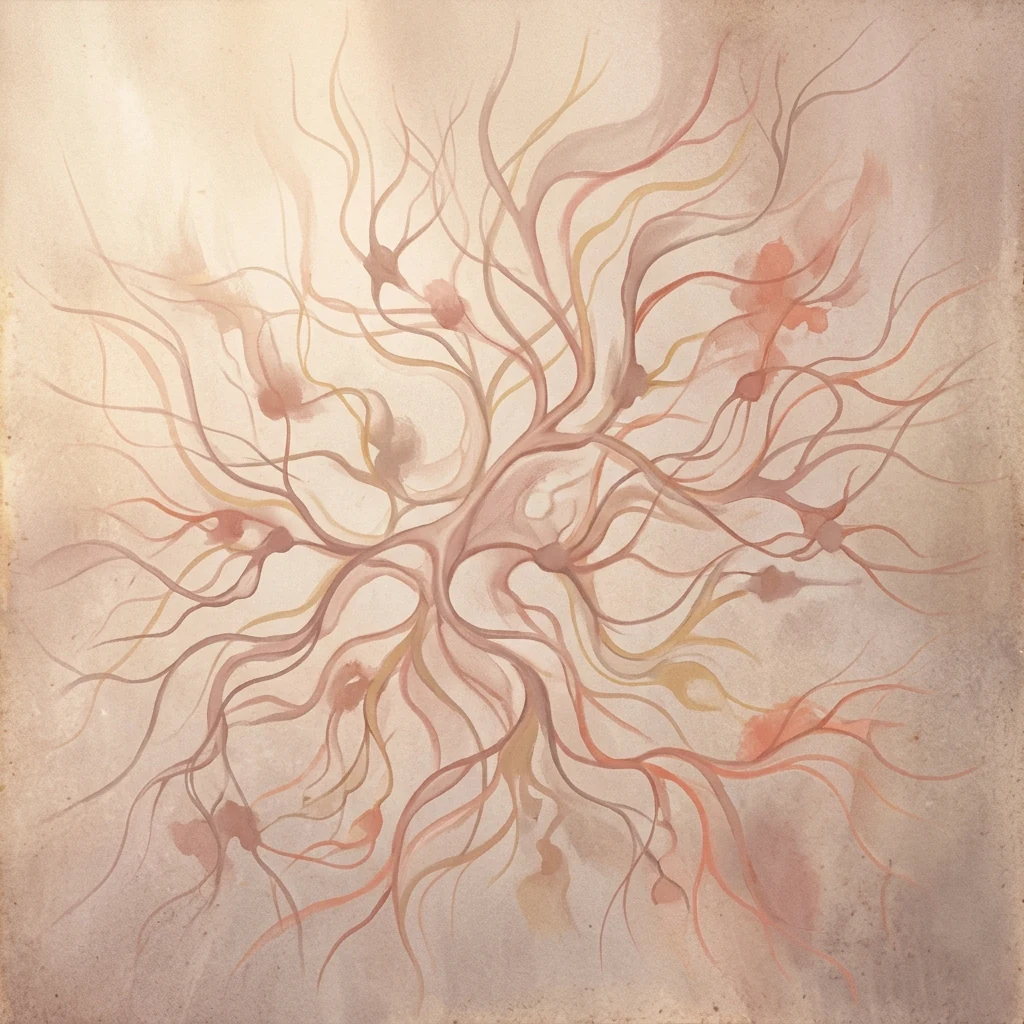
The unified-self experience is, biologically speaking, a real-time fabrication.
A handful of pieces of evidence make the point harder to dodge than it ought to be.
The first is the split-brain experiments. In the 1960s the neuroscientists Roger Sperry and Michael Gazzaniga worked with patients who had had their corpus callosum severed — usually to control severe epilepsy. The corpus callosum is the broad cable that allows the two halves of the brain to talk to each other; without it, the hemispheres start acting like two separate agents in the same head. The experiments are, in retrospect, very strange.
Show the right hemisphere a picture — through the left half of the visual field — of a snow shovel. The right brain understands the picture, but the right brain does not control speech. Ask the patient what they saw. The left hemisphere, which does control the mouth, did not see the shovel. So it makes something up.

It does not lie. It does not realise it is inventing. It looks at what the other side of the body is doing — say, sketching a small shovel with the left hand — and confabulates a reason. "I drew a shovel because I was thinking about clearing the driveway." The reason sounds plausible to the patient. The reason was authored in the half-second between the question and the answer. There was no shovel-clearing thought before the question was asked.
Gazzaniga gave this storyteller a name: the interpreter. He proposed that it is always on, in everyone, even in brains that have not been surgically split. Its entire job, all day, is making the rest of the brain's behaviour look authored. It tells you why you stopped at the second café and not the first. It tells you why you said the thing you said at the dinner. It tells you, in many cases, what kind of person you are.
You do not get to see its rough drafts.
A second piece of evidence is the timing. Conscious experience runs roughly two hundred milliseconds behind the actual neural activity that produces it. The version of you that decides to do something has, in most cases, decided about a fifth of a second after a deeper part of the brain has already begun to act. This is part of the long, slow argument about free will, and it is not as bleak as people make it sound; but it is suggestive. The decider is downstream of the deciding.
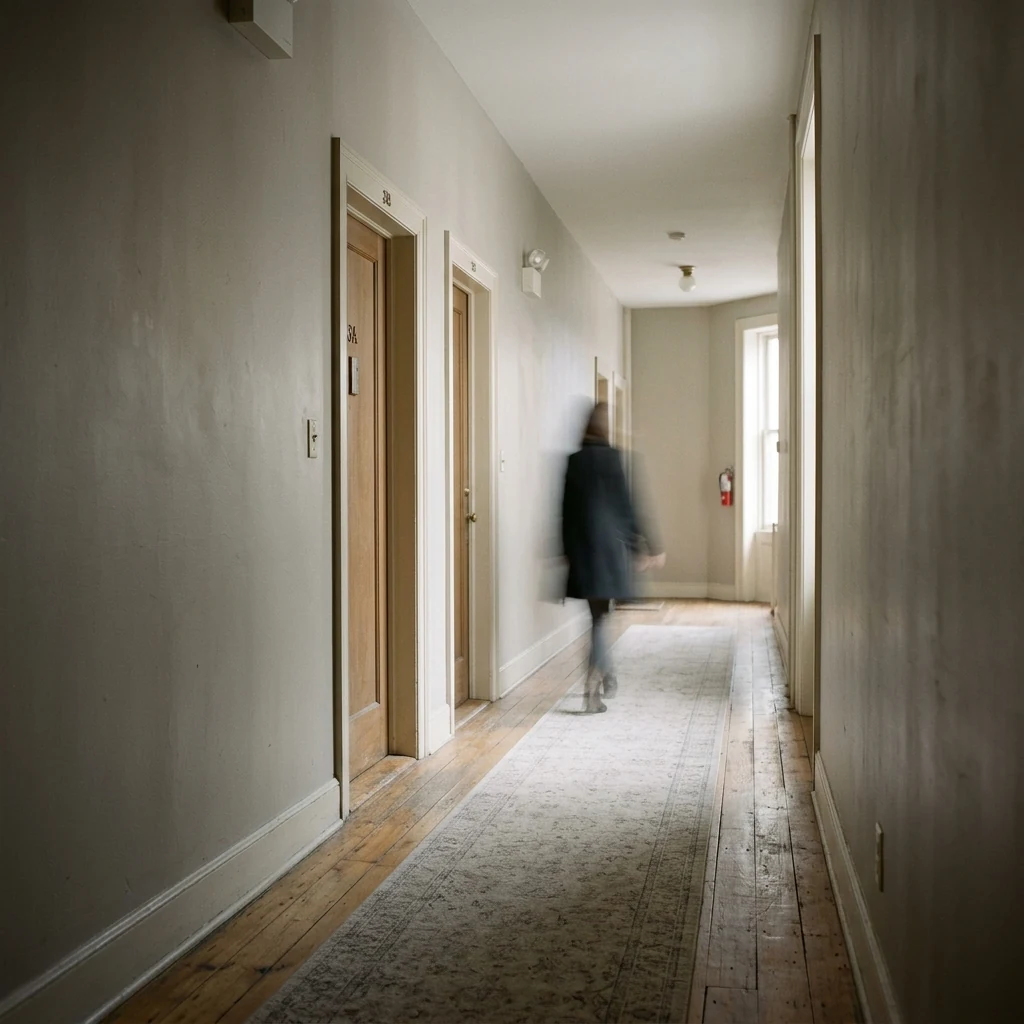
A third is the daily reconstruction. You are not, in any rigorous neurobiological sense, the same person you were yesterday. The neural state has shifted. The baseline cortisol has shifted. The gut microbiome has turned over — fast — and the body's chemistry of mood has tilted accordingly. The continuity you experience is reconstructed each morning out of memory and habit and a face in the mirror that has not changed enough to alarm anyone.
The illusion is seamless enough that almost nobody catches it for almost their whole life. But the seams briefly show. At the moment of waking, before the construct loads. In déjà vu. In dissociation. In the strange half-second of catching your reflection in a darkened shop window and not, for an instant, recognising yourself.
These are not bugs. These are the construct loading.

And so the you who is sitting up in bed at 7:34 on a Wednesday is a small temporary committee of subroutines that have agreed, mostly silently, to call themselves by one name. And so you, asking yourself what you ought to do today — are listening to a story being told to you, by you, about you.
You sit up. You put your feet on the cold floor. You walk to the kitchen.
The version of you who walks into the kitchen will not be exactly the version that left the bedroom. The committee will have shifted by a member or two in the seven seconds it takes to cross the hallway. None of you will notice. The interpreter will smooth it over before you can even formulate the question.

The morning version of you and the afternoon version of you will pass each other in the corridor sometime around three, and neither will acknowledge the other. By tomorrow morning, when the lights come on again and the systems load again, neither will be quite there.
You make coffee. You drink it.
You begin telling the story.