On the Unread Email as the Modern Equivalent of an Unopened Letter from Your Mother
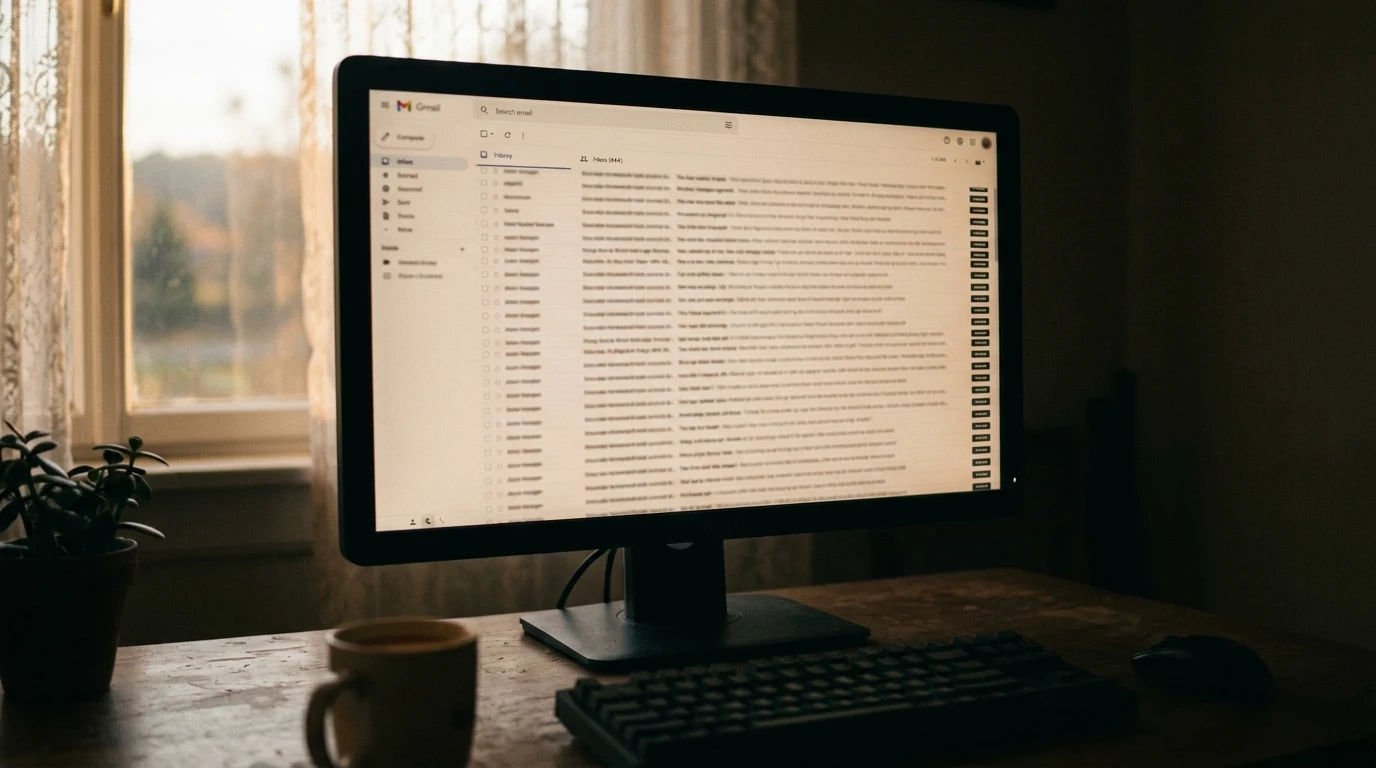
You open your inbox. There are 287 unread emails. One of them is from your mother. It is from three weeks ago. The subject line is no rush.
You have not opened it.
You also have not deleted it. You have not marked it as read without reading. You have not done anything to it. It is sitting in the inbox, unread, where it has been for three weeks.
You scroll past it for the eleventh time today.
You scroll past it because if you opened it now and replied to it with the thoughtfulness it deserves, you would have to spend forty-five minutes you do not have. And if you opened it now and replied to it with anything less, you would be telling your mother that she was less than worth forty-five minutes. So you do nothing.
The email weighs about six grams, in the way that a letter weighs about six grams.

The history of unanswered correspondence is the history of being a person who cares about other people.
In the 1740s, in Britain, an unopened letter from a parent on the hall table was the most specific kind of guilt available in the room. The letter sat. The owner of the house passed it many times a day. The letter did not leave until either it was read, or the owner of the house was felled by it, or, occasionally, both. You can walk through the biography of almost any Georgian or Victorian person of letters and find the same scene: the writer pauses on the stairs, looks at the small white object on the table, considers it, walks past it. The biographer will spend three sentences on it. Everyone knows what is happening.
This is not actually a fact about postal letters. It is a fact about obligation that has been deferred.
The modern inbox is the same fact, made denser.
Three hundred years ago you had perhaps four such items at any given time. Now you have somewhere between thirty and three hundred. Each of them is, in some technical sense, a letter on the hall table. Most of them are not actually personal — they are bills, notifications, marketing campaigns calibrated to the exact threshold of your mild interest. But the brain that recognises them is still the brain that recognised letters on the hall table. The brain treats every unread message as a small bell from a small person who needs something from you, regardless of whether anyone in particular sent it.

This is part of why an inbox makes you tired in a way the same number of physical letters never did. The bell is constant. The bell does not know how to be silent.
Your mother's email is, at three weeks, a different kind of weight than the email from LinkedIn telling you that one of your old colleagues has been promoted. The interface does not surface the difference. The interface treats both as items in a list — same row height, same font weight, same little circle indicating unread. The brain knows the difference even when the interface does not.
You cannot really clear the inbox.
The medium has been designed so that clearing it is not a stable state. You can declare email bankruptcy. You can archive everything. You will, within a week, have fifty new ones. The unopened letter from your mother is, in a strange way, the only durable thing in the inbox — because the other unread items have a half-life, and the message from your mother does not.
And so you, scrolling past the message from your mother for the twelfth time on a Thursday afternoon — are doing exactly what a 1740s heir would have done, walking past the letter on the hall table for the twelfth time on a Thursday afternoon, three hundred years before email existed.
You will reply tomorrow.
You will not.
You will reply on the weekend.
You will not.
You will reply when you have a quiet hour.
You will not have a quiet hour.
In a year, looking for something else at the bottom of an old archive, you will see the subject line — no rush — and it will catch you, and you will sit with the feeling for a small while. Your mother will, in the year between then and now, have not mentioned it. Your mother will, in the year between then and now, have written you several more emails, each of which you will mean to reply to, and several of which you will not.
You close the inbox. You go on with your day.
The letter is still on the hall table.