The Cruelty of Optimization
You wake up. Before standing, you check your sleep score. 71.
The app does not say this is fine. The app says fair, with a small frowning emoji, and a suggestion that you go to bed 23 minutes earlier tomorrow. You feel slightly worse than you would have felt without the app.
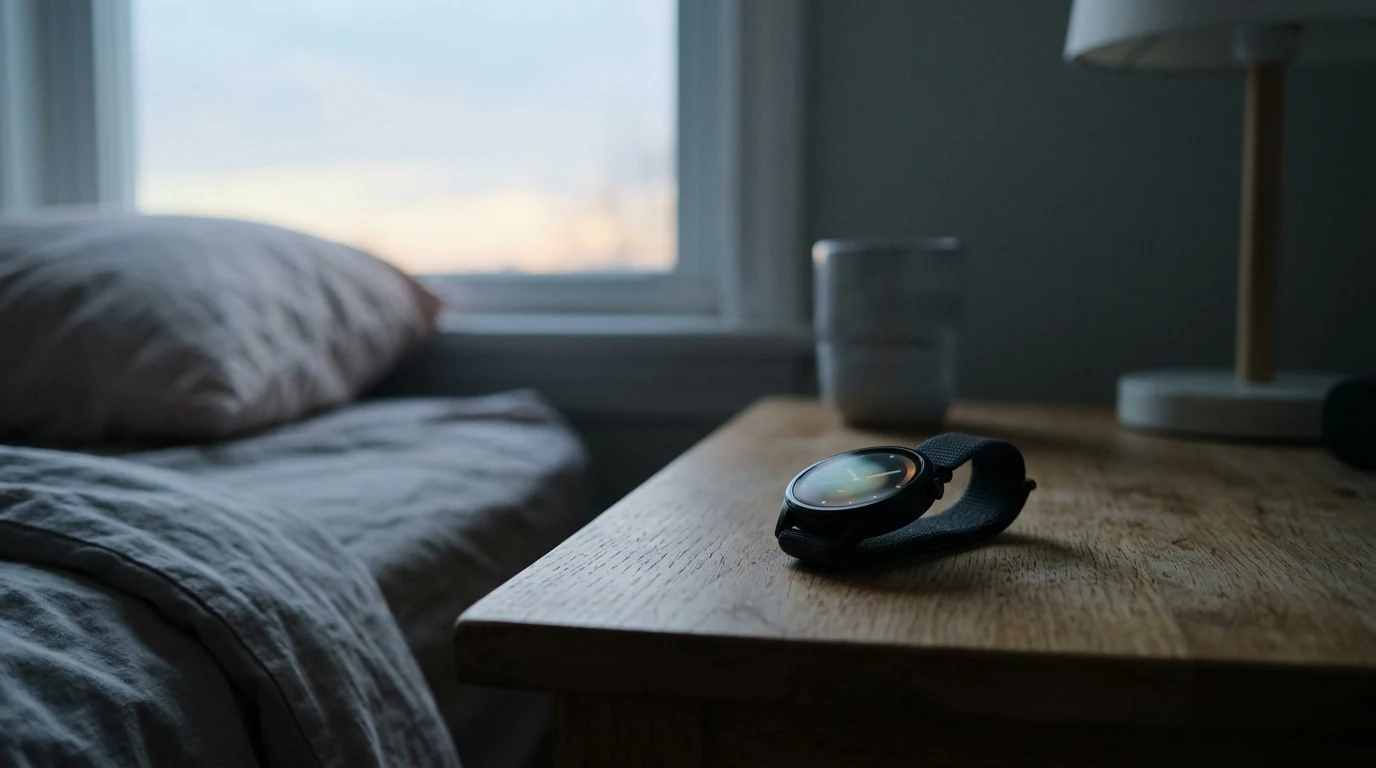
You stand up. The watch on your wrist is pleased that you have stood. You walk to the kitchen. The watch is counting your steps. Your day has begun. The watch will not stop counting until you remove it from your wrist at eleven tonight, and then it will stop counting reluctantly, having one more thing to say about it in the morning.
You did not consent to this measurement.
You signed up for it.

There is a difference between these two facts. The brain has stopped being able to feel it.
The history of self-measurement is long and almost entirely Anglo. The daily journal in the 1700s. The diet log in the 1860s. The calorie counter in the 1920s. The pedometer in the 1990s. The heart-rate-variability score in the 2010s. The sleep score in the 2020s. The pattern is consistent: every generation invents a new metric, and within about twenty years, the metric becomes a moral obligation.
What is new in this generation is that the metric is no longer being kept by you. It is being kept for you, by a piece of consumer hardware that you bought, and by a piece of software that you cannot uninstall without losing the data, and by a service that is monetising you in ways you are not allowed to fully see. The diet log of the 1860s reported to nobody. The sleep score of the 2020s reports to a server in Cupertino, or in Hangzhou, or in some other distant municipal node that has an opinion about your unconscious.
The deeper problem is that the apparatus has acquired moral authority.
You cannot opt out without being told that you are not taking care of yourself. Health, wellness, self-improvement — the vocabulary of obligation has shifted from a religious register to a technological one, but the move is the same move, the priesthood is the same priesthood, the guilt is the same guilt. There is a recognisable architecture under all of this. You just do not see it, because the people running it speak a different language than the people who used to run it.
But the deepest cruelty is not the borrowed vocabulary of obligation.
The deepest cruelty is that, on a long view, nothing optimized is the best version of itself.
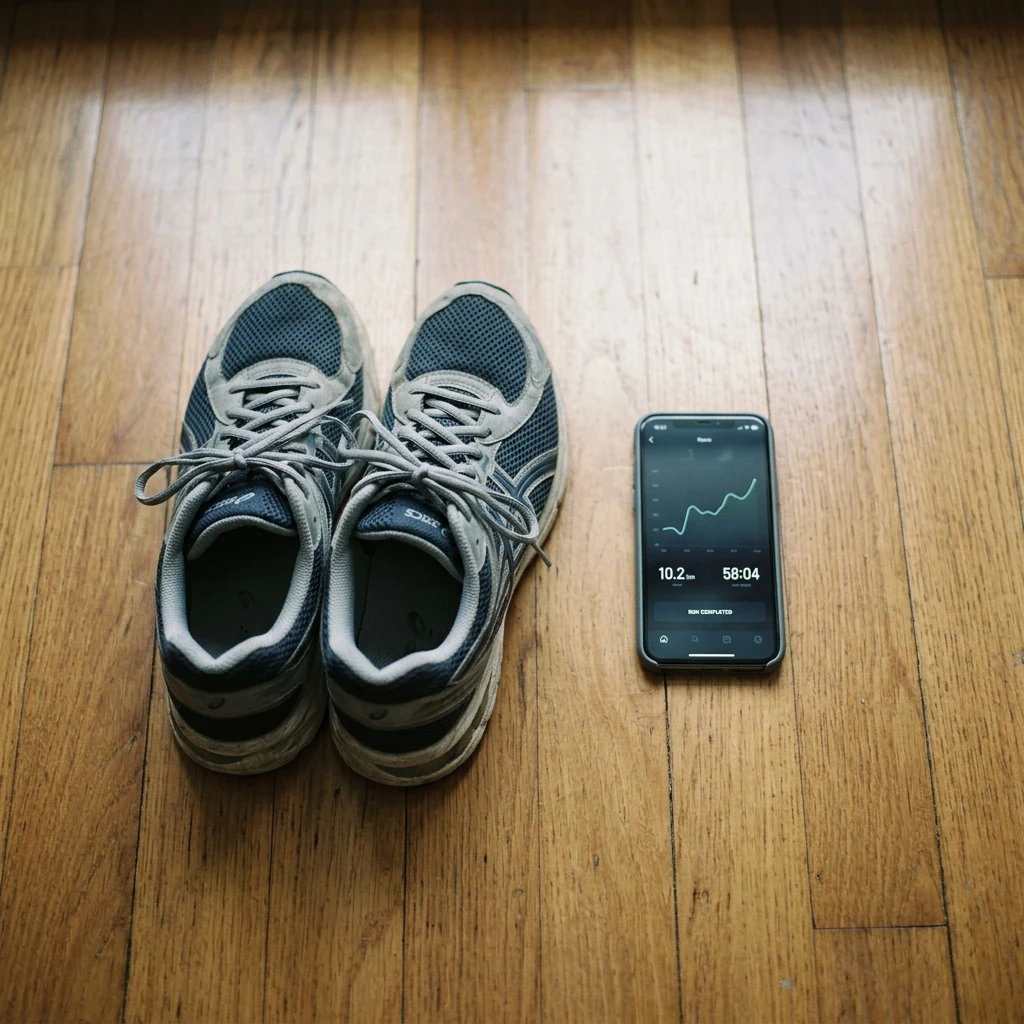
The most-optimized sleep is anxious sleep. You can feel the score being calculated; you can feel yourself trying to sleep correctly; you have moved from sleeping to performing sleep, and the performance is worse than what you were doing before. The most-optimized exercise is the exercise done while looking at a screen, which is, all things considered, a slightly worse exercise than the same forty minutes spent looking at a tree. The most-optimized meal is the meal whose calories you have entered into an app, and is — you would not say so, but the body knows — a less pleasant meal than the one you ate without entering anything. The most-optimized relationship is a relationship in which the partners are tracking each other's calendars, and is on every axis the brain actually cares about a slightly worse relationship than the one in which both calendars are slightly unknown.
The optimization makes the thing it touches faintly worse, in a way that does not show up in the metric.

The walk you took without the watch — the one where you saw a bird and stood for thirty seconds — is, on the axes the body cares about, a better walk than the one you took with it. The watch does not have a column for that walk.
The apparatus cannot tell you this. The apparatus has its own interest at heart — engagement, retention, monetisation. It pretends to serve you. It makes you serve it.
And so the small bright object on your wrist, which you welcomed in because it would help you live better, is — on a long view — the same shape as every priesthood that previous generations welcomed in for similar reasons. Except this one is owned by a public company, and answers to its shareholders, and the moral guilt it produces in you is a feature of its revenue model.
You take the watch off. You put it on the bedside table. It will not be on your wrist for two hours. The watch is mildly disappointed, but only mildly; it will resume the relationship without holding it against you.
You make breakfast. You eat it without entering the calories. You go for a walk without counting the steps.
The walk takes the same amount of time it would have taken otherwise. It is slightly more pleasant. It runs slightly longer than you intended. You see a small bird that lands on a railing and looks at you for two seconds before flying off. You stop. You stand on the pavement watching the empty railing for a second too long.
The empty railing does not have a column in any app you own.

In the evening you put the watch back on. The next morning the sleep score is 73. The app says fair. You did nothing differently. The relationship resumes. The apparatus has the longest memory.
You will take it off again next Sunday. You will put it back on Monday morning.
The cycle has the rhythm of a religious calendar.
It is doing exactly what it was designed to do.